
Stainless Steel Seamless Pipes are hollow, jointless pipes manufactured from solid stainless steel billets through processes such as piercing or extrusion, followed by hot working or cold drawing and heat treatment. Unlike welded pipes, they have no longitudinal weld seam. They are commonly specified for pressure, high-temperature and corrosive service, depending on the material grade, dimensions, manufacturing quality and applicable standard.
Kamal Steels is a Mumbai-based manufacturer and stockist of stainless steel seamless pipes, established in 1984. We manufacture and maintain stock of seamless pipes in a range of austenitic and duplex stainless steel grades, subject to size and availability. These pipes serve requirements across chemical, petrochemical, power generation, oil and gas and other industrial sectors.
Buyers can enquire about available grades, outside diameters, wall thicknesses, schedules, applicable standards and material test certificates (MTC).
Request a Quotation for Stainless Steel Seamless Pipes
Share your required grade, size, schedule and quantity with Kamal Steels to check availability and request a quotation.
Request a Quote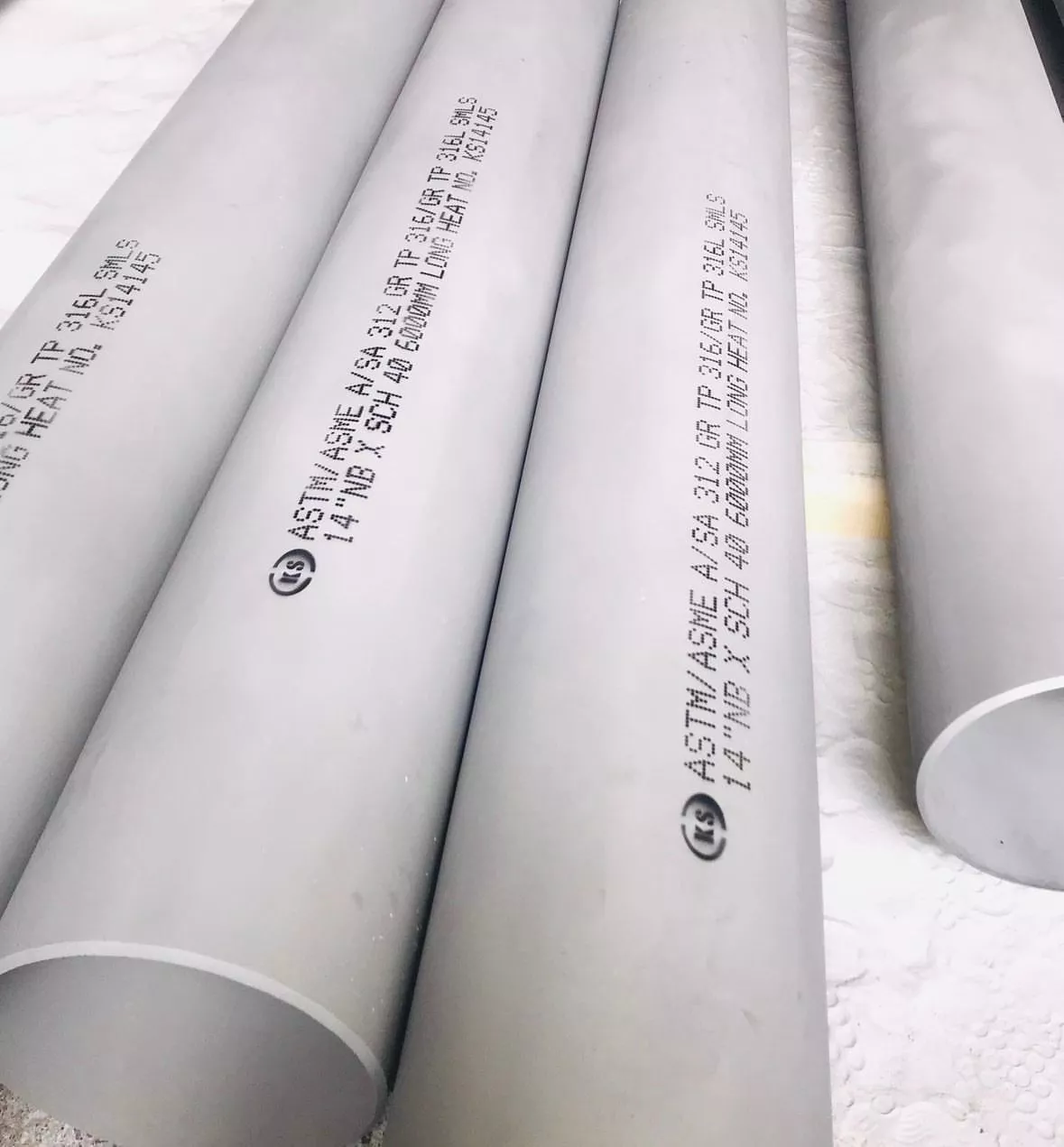
Common Grades of Stainless Steel Seamless Pipes
Grade choice depends on the fluid, temperature, chloride level and welding route. The tables summarise how each family is generally used; they do not state composition or mechanical values, which come from the product specification and the mill certificate. Not every grade is covered by every specification, and availability by size should be confirmed per enquiry.
Austenitic Grades
| Grade | UNS | Key characteristics | Typical applications |
|---|---|---|---|
| TP304 / 304L / 304H | S30400 / S30403 / S30409 | General-purpose austenitic. L has lower carbon for welded fabrication; H is the higher-carbon version used for elevated-temperature strength. | Process piping, food and beverage, general chemical service; 304H for heated service. |
| TP310 / 310S | S31000 / S31008 | Heat-resisting austenitic with good oxidation resistance at high temperature. | Furnace and heat-treatment piping, high-temperature process lines. |
| TP316 / 316L / 316H / 316Ti | S31600 / S31603 / S31609 / S31635 | Molybdenum-bearing for better pitting resistance than 304. L suits welding; Ti is titanium-stabilised. | Chemical, marine-exposed and pharmaceutical lines; 316Ti for the sensitising temperature range. |
| TP317 / 317L | S31700 / S31703 | Higher molybdenum than 316 for more aggressive chloride and acid conditions. | Pulp and paper, flue-gas and chemical plants. |
| TP321 / 321H | S32100 / S32109 | Titanium-stabilised for resistance to intergranular attack after heating. | Refinery, heat-exchanger and high-temperature lines. |
| TP347 / 347H | S34700 / S34709 | Niobium-stabilised; similar purpose to 321. | Power, refinery and petrochemical high-temperature service. |
| 904L | N08904 | High-alloy austenitic with copper addition for strong acid resistance. | Sulphuric-acid and other aggressive chemical service. |
Duplex and Super Duplex Grades
| Grade | UNS | Key characteristics | Typical applications |
|---|---|---|---|
| Duplex 2205 | S31803 / S32205 | Mixed austenite and ferrite structure; higher strength than common austenitics with good chloride stress-corrosion resistance | Oil and gas, desalination, chemical processing |
| Super duplex | S32750 / S32760 | Higher alloy content for more demanding chloride service | Offshore, seawater and aggressive process lines |
Stainless Steel Seamless Pipes & Tubes Specifications
The parameters below are what a buyer should define for any seamless stainless steel pipe order. They describe the general industry framework. Kamal Steels' actual size range, wall thickness range and stock sizes before adding a range to this page.
| Parameter | What to specify | Notes |
|---|---|---|
| Material grade | Grade and UNS or EN designation | See grades above |
| Product specification | For example ASTM A312, A790 or EN 10216-5 | Sets chemistry, tests and tolerances |
| Nominal pipe size (NPS) or DN | Size designation for pipe | For NPS 12 and smaller, the actual outside diameter is larger than the size number |
| Outside diameter | In mm or inches | Tubes are ordered by actual OD rather than NPS |
| Wall thickness / schedule | Schedule such as 10S, 40S or 80S, or wall in mm | The "S" suffix marks stainless schedules from ASME B36.19M |
| Manufacturing type | Seamless, hot-finished or cold-finished | Cold-drawn pipe is generally used where closer dimensional control is needed |
| Length | Random, double random or cut length | Confirm tolerance with the order |
| Delivery condition and finish | Solution annealed, pickled or bright annealed, polished if required | Affects surface and corrosion performance |
| End finish | Plain end, bevelled end | Bevel details follow the applicable standard |
| Testing and documents | Tests, certification type, third-party inspection | See quality assurance |
Pipe versus Tube: How Sizes Are Expressed
Pipe sizes follow nominal pipe size and schedule, while tube sizes use the actual outside diameter and a wall thickness in mm or gauge. ASME B36.19M covers pipe dimensions; tube specifications such as ASTM A213 and A269 apply to tubing. Quoting the wrong convention is a common cause of enquiry back-and-forth, so state OD and wall thickness in mm when in doubt.
Key Standards for Seamless Stainless Steel Pipes
Standards play different roles. A product specification sets chemistry, manufacture, testing and tolerances; a dimensional standard fixes sizes and schedules. An order normally cites one of each. No single standard applies to every seamless pipe.
Product Specifications
| Standard | What it covers | Typical use |
|---|---|---|
| ASTM A312 / ASME SA312 | Seamless, straight-seam welded and heavily cold-worked welded austenitic stainless steel pipe for high-temperature and general corrosive service | General process and plant piping; the usual reference for austenitic seamless pipe |
| ASTM A790 | Seamless and welded ferritic/austenitic (duplex) stainless steel pipe | Duplex and super duplex piping |
| ASTM A213 / ASME SA213 | Seamless ferritic and austenitic alloy steel boiler, superheater and heat-exchanger tubes | Tubes rather than pipe, for boilers and heat exchangers |
| ASTM A269 | Seamless and welded austenitic stainless steel tubing for general service | General corrosion-resistant and instrument tubing |
| ASTM A789 | Seamless and welded ferritic/austenitic stainless steel tubing for general service | Duplex tubing |
| EN 10216-5 | Technical delivery conditions for seamless austenitic and austenitic-ferritic stainless steel tubes for pressure purposes, with two test categories; current edition 2021 | European-market and pressure equipment projects |
Dimensional and General-Requirements Standards
| Standard | What it covers | Note |
|---|---|---|
| ASME B36.19M | Dimensions of welded and seamless wrought stainless steel pipe, using the "S" schedule suffix | Some wall thicknesses differ from ASME B36.10M carbon-steel pipe at certain sizes, so check which table the order refers to |
| ASTM A999 | General requirements for alloy and stainless steel pipe | Referenced by pipe specifications; confirm the edition cited on your order |
The German national adoption of the European standard is DIN EN 10216-5.
Seamless vs Welded Stainless Steel Pipes
Seamless pipe has no longitudinal seam; welded pipe is formed from strip or plate and joined along a seam, and may be cold-worked afterwards. Seamless is often selected for higher-pressure, higher-temperature or critical service, and welded for larger diameters and cost-sensitive lines. A seamless pipe is not automatically stronger than every welded pipe: capacity depends on grade, wall thickness, manufacturing quality and the design code, and some codes apply a joint quality factor to welded pipe. Match the choice to the service conditions and the code your project follows.
Stainless Steel Seamless Pipe Applications
- Chemical and petrochemical plants: 304L, 316L, 317L and 904L for corrosive process streams.
- Oil and gas and offshore: duplex and super duplex for chloride-bearing service.
- Power and refining: 321, 347 and the H grades for high-temperature lines.
- Desalination and water treatment: duplex, super duplex and 904L where chloride exposure is high.
- Pharmaceutical, food and beverage: 304L and 316L where cleanliness and finish matter.
Quality Assurance and Testing
Buyers should specify the checks they need on the purchase order. The items below are commonly requested for seamless stainless steel pipe. Which of these Kamal Steels performs in-house, which are done by the mill, and which by an outside laboratory.
- Material identification: heat number, grade, specification and size marked on each pipe, with positive material identification (PMI) available on request.
- Dimensional and visual checks: outside diameter, wall thickness, length, straightness and surface condition checked against the order and the specification's tolerances.
- Specification tests: depending on the standard and order, a hydrostatic or non-destructive electric test, flattening or flaring tests, tensile and hardness tests, and an intergranular corrosion test (for example ASTM A262) or duplex phase checks where specified.
- Traceability: the heat number on the pipe links it to the chemical and mechanical results on the certificate.
- Material Test Certificates: supplied with the consignment. EN 10204 3.1 as standard.
- Third-party inspection: EN 10204 3.2 certificates involve an independent or purchaser's inspector. Whether Kamal Steels arranges inspection by outside agencies on request.
EN 10204 3.1 is a certificate issued by the manufacturer and validated by a representative independent of production; 3.2 adds validation by a purchaser-appointed or authorised inspector. Say which one you need when you enquire.
Packing and Export Packaging
Stainless steel needs protection from damage and from iron contamination during handling. The practices below are typical for export consignments. Kamal Steels' standard packing method and available options.
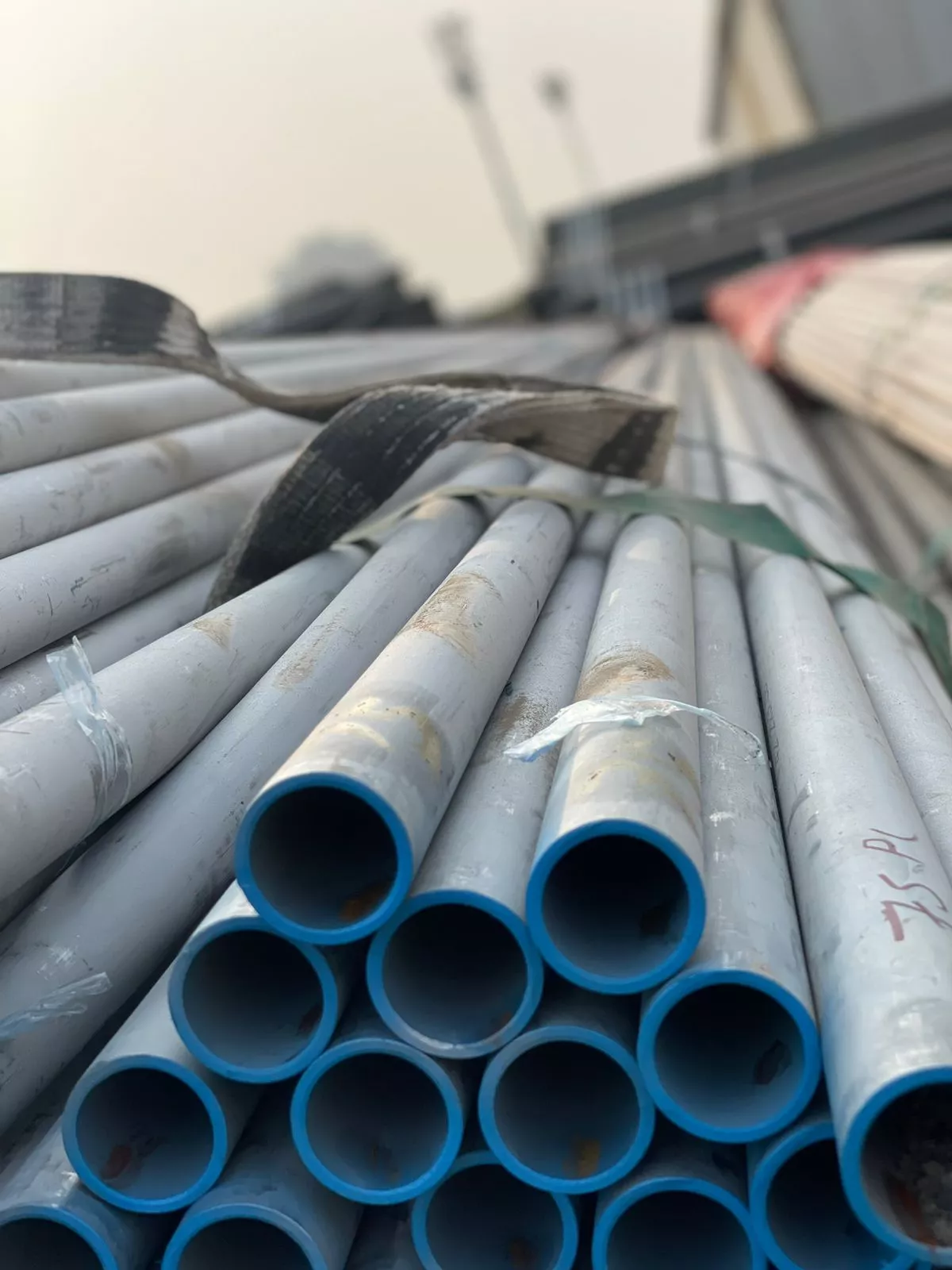
- End caps: plastic caps on pipe ends to keep out dirt and protect bevels.
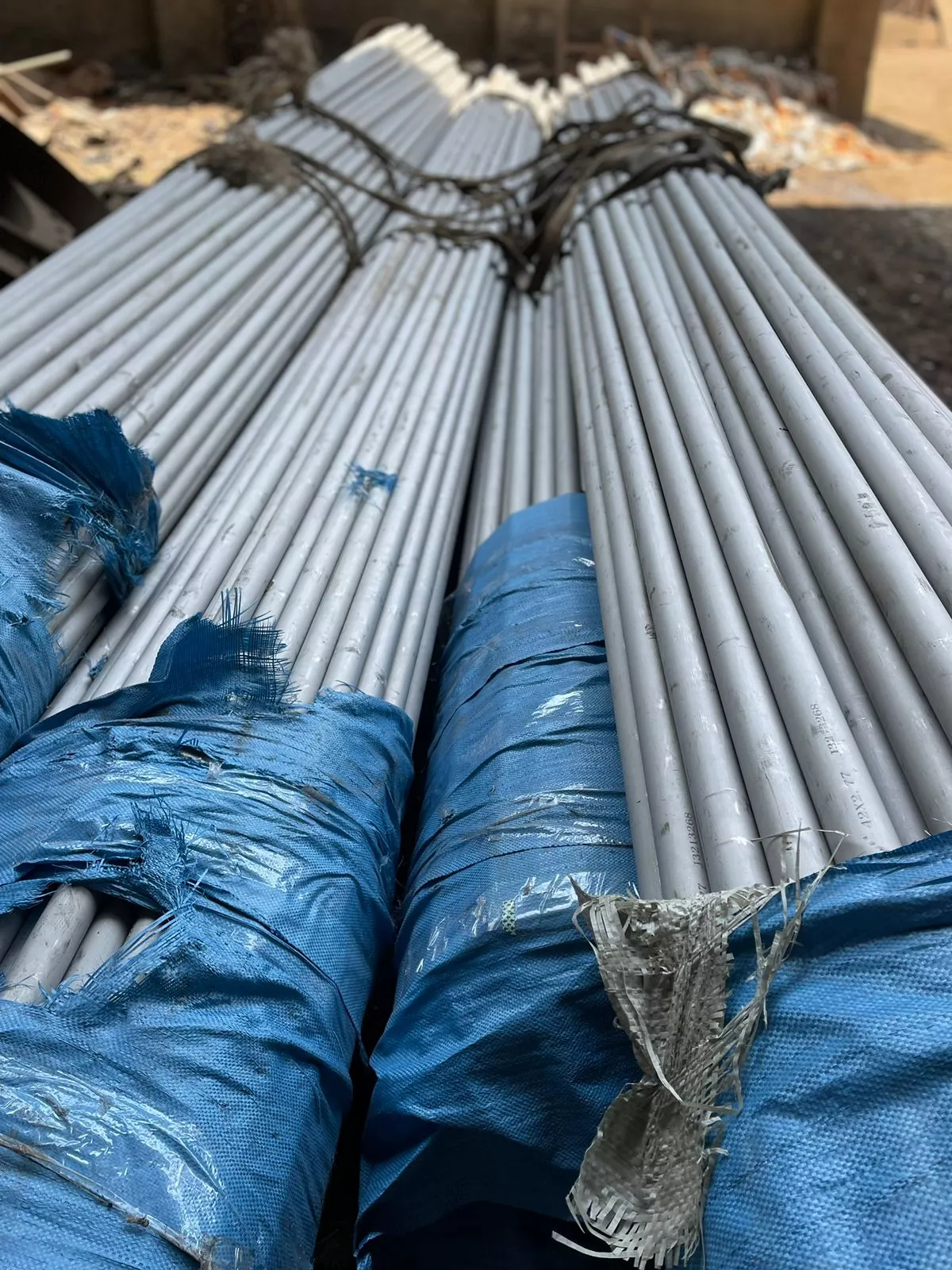
- Bundling: pipes bundled with straps, or packed in wooden cases or on pallets for export, with treated wood where the destination requires it.
- Protective wrapping: waterproof or polyethylene wrapping to protect the surface in transit.
- Segregation: stainless pipe kept apart from carbon steel and handled with non-metallic slings or protected contact points.
- Marking: grade, specification, size and schedule, heat number, length and order reference on pipes and on the package.
- Transport: secure loading in container or truck to prevent movement and surface damage.
Supply and How to Request a Quotation
Kamal Steels supplies seamless stainless steel pipes as a manufacturer and stockist. Which sizes are held in stock, which are made to order, typical lead times, minimum order quantity, and export markets served. To get an accurate quotation, send:
- Grade and UNS or EN designation, and the product specification.
- Size: NPS and schedule, or outside diameter and wall thickness in mm.
- Length, delivery condition, finish and end finish.
- Quantity and delivery location.
- Testing and certificate requirements (for example EN 10204 3.1 or 3.2, third-party inspection).
- Packing requirements for export.
HSN Code and Export Classification
Seamless stainless steel pipes and tubes fall under heading 7304 of the Harmonised System, which India's customs tariff extends to eight digits. The correct eight-digit code depends on the product form and use, for example whether the pipe is line pipe or another type, hot- or cold-finished, and its diameter. Tariff listings show 73044900 for other circular-section stainless seamless tubes, but classification should be confirmed with your customs broker or chartered accountant before it appears on an invoice or shipping document.
Frequently Asked Questions
What is a stainless steel seamless pipe?
A hollow pipe made without a weld seam, by piercing or extruding a solid stainless steel billet and finishing it by hot working or cold drawing, then heat treating it.
What is the difference between seamless and welded stainless steel pipe?
Welded pipe is formed from strip or plate and joined along a seam; seamless pipe has none. Seamless is often chosen for critical or high-pressure service, but suitability depends on grade, wall thickness, quality and the governing code.
Which standard applies to seamless stainless steel pipe?
ASTM A312 is the usual specification for austenitic pipe and A790 for duplex pipe. A213 and A269 cover tubes. ASME B36.19M gives pipe dimensions and EN 10216-5 covers seamless stainless tubes for pressure purposes.
How do I choose between 304L and 316L?
Both are low-carbon austenitic grades. 316L contains molybdenum for better resistance to pitting in chloride-bearing media, while 304L is common for less aggressive service. Confirm against your process conditions.
What does EN 10204 3.1 mean?
It is a manufacturer-issued inspection certificate validated by a representative independent of the production department, showing the test results for the delivered material. Type 3.2 adds validation by a purchaser-appointed or authorised inspector.
What does schedule 10S or 40S mean?
The number sets the wall thickness for a given nominal pipe size and the "S" marks the stainless schedules in ASME B36.19M. Wall thickness changes with pipe size under the same schedule.
What is the HSN code for stainless steel seamless pipes?
They fall under heading 7304. The exact eight-digit code depends on product form, so confirm it with your customs broker before invoicing.
What details should I send for a quotation?
Grade, specification, size or schedule, length, quantity, testing and certificate requirements, packing and delivery location.
Contact Kamal Steels
Looking for stainless steel seamless pipes for an industrial project or bulk order?
Contact Kamal Steels to enquire about grade, size, schedule, stock availability and pricing.
Call or WhatsApp: +91-8879048749 / +91-9820982737
Email: sales@kamalpiping.com
Location: Mumbai, Maharashtra, India
Share your material specification and quantity, and our team will check availability and respond with a quotation.