
-
-
-
Girgaon, Mumbai - 400004
Stainless Steel Round Pipe Manufacturer in India
Kamal Steels supplies Stainless Steel Round Pipes for industrial, commercial and engineering applications. These pipes are available in different grades, outside diameters, wall thicknesses and lengths, depending on the applicable specification and supply requirements.
Stainless Steel Round Pipe is used to transport liquids and gases, manufacture industrial equipment, and construct systems that require corrosion resistance and mechanical strength. Selecting the correct grade and pipe specification is important for achieving the required performance in the intended service environment.
Common material options include stainless steel 304, 304L, 316 and 316L. Other grades can be considered according to temperature, corrosion exposure, fabrication requirements and applicable standards. Availability and supply specifications should be confirmed when requesting a quotation.
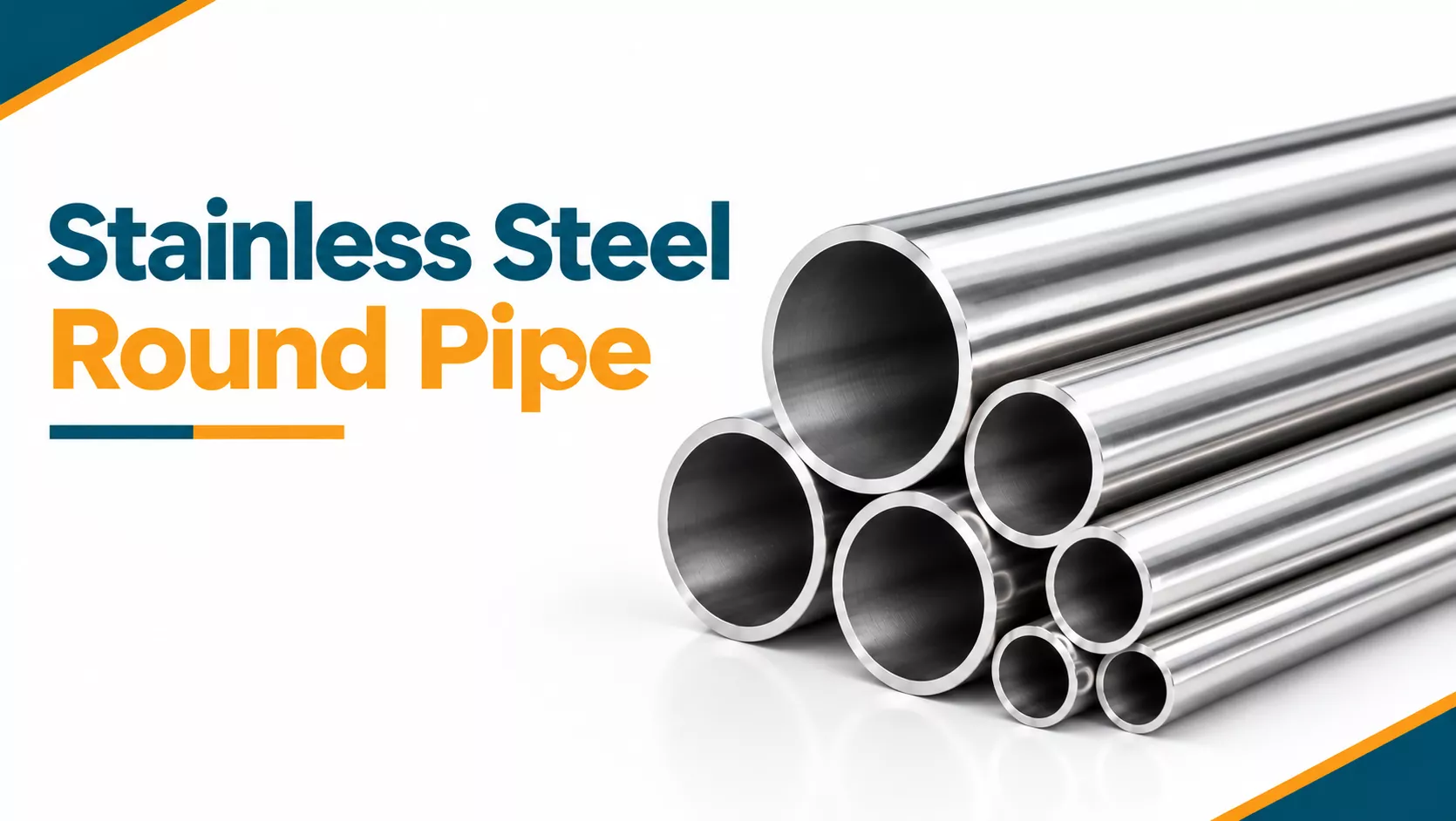
What Is Stainless Steel Round Pipe?
Stainless steel round pipe is a hollow cylindrical product manufactured from stainless steel. Its corrosion resistance comes primarily from the chromium-rich passive layer that forms on the material's surface. The exact performance depends on the grade, surface condition and operating environment.
Round pipes are commonly specified by nominal pipe size (NPS) or another applicable size designation, outside diameter, schedule or wall thickness, material grade and product standard. For pressure-containing applications, the design pressure, temperature and relevant piping code must also be considered.
Although the terms pipe and tube are sometimes used interchangeably in general conversation, they can refer to products governed by different dimensional conventions and specifications. Buyers should state the required product form and standard when placing an order.
Stainless Steel Round Pipe Grades
The appropriate stainless steel grade depends on corrosion exposure, temperature, mechanical requirements, welding conditions and the applicable design specification.
| Grade | Material Characteristics | Typical Applications |
|---|---|---|
| 304 | General-purpose austenitic stainless steel with good corrosion resistance in many everyday environments. | General industrial equipment, water systems and fabrication. |
| 304L | Low-carbon version of 304, commonly selected where reduced sensitization during welding is important. | Welded equipment and fabricated pipe systems. |
| 316 | Contains molybdenum, improving resistance to many chloride-containing environments compared with 304. | Chemical equipment, coastal installations and selected process systems. |
| 316L | Low-carbon version of 316, often preferred for welded components requiring suitable corrosion performance. | Chemical processing, fabricated equipment and industrial piping. |
| 321 | Titanium-stabilized austenitic stainless steel designed for applications where resistance to sensitization is relevant. | Selected elevated-temperature and welded applications. |
| 310S | Heat-resistant austenitic stainless steel with elevated chromium and nickel content. | Furnace components and selected high-temperature equipment. |
| 317L | Molybdenum-bearing, low-carbon stainless steel used where enhanced corrosion resistance is required. | Selected chemical-processing environments. |
| 904L | Highly alloyed austenitic stainless steel designed for certain demanding corrosive environments. | Specialized chemical and process equipment. |
These are general selection examples, not a guarantee of suitability for every service. Confirm the material grade against the process conditions, product specification and engineering requirements.
Manufacturing Methods for Stainless Steel Round Pipe
Seamless Stainless Steel Pipe
Seamless pipe is produced without a longitudinal weld seam. The manufacturing process typically involves forming a hollow billet and carrying out subsequent sizing and finishing operations. Seamless pipe is used in applications where its specified dimensions, mechanical properties and product standard meet the design requirements.
Welded Stainless Steel Pipe
Welded pipe is manufactured by forming stainless steel strip or plate into a cylindrical shape and joining the edges by a suitable welding process. Depending on the manufacturing route and specification, welded pipe may undergo additional forming, heat treatment, weld inspection and finishing operations.
Choosing Between Seamless and Welded Pipe
The choice should be based on the required standard, size range, design conditions, weld quality requirements, inspection provisions and project specification. Seamless pipe is not automatically suitable for every application, and properly manufactured welded pipe can also meet demanding requirements when specified and verified correctly.
Stainless Steel Round Pipe Standards and Specifications
The governing standard defines relevant requirements such as material grade, manufacturing method, dimensions, testing and acceptance criteria. The correct specification depends on the pipe type and intended application.
| Standard | General Scope | Selection Note |
|---|---|---|
| ASTM A312 / ASME SA312 | Seamless, welded and heavily cold-worked austenitic stainless steel pipes for specified high-temperature and general corrosive service. | Confirm grade, product form and edition required by the project. |
| ASTM A358 | Electric-fusion-welded austenitic chromium-nickel alloy steel pipe, generally used for larger pipe sizes. | Check the applicable class, dimensions and supplementary requirements. |
| ASTM A790 | Seamless and welded ferritic/austenitic stainless steel pipe, including specified duplex grades. | Applicable when the selected material and service require a duplex pipe specification. |
| ASME B36.19M | Dimensional standard for stainless steel pipe. | Use with the applicable material specification and design requirements. |
| ASME B36.10M | Dimensional standard for welded and seamless wrought steel pipe. | Do not assume its dimensions are interchangeable with every stainless steel schedule. |
Not every standard applies to every stainless steel pipe. Always confirm the exact material specification, dimensional standard and project requirements before ordering.
Stainless Steel Round Pipe Dimensions and Sizes
Stainless steel round pipes are specified using dimensions appropriate to the governing standard. Common ordering details include nominal pipe size, outside diameter, wall thickness or schedule, length and dimensional tolerances.
| Dimension | What It Means | Why It Matters |
|---|---|---|
| Nominal Pipe Size (NPS) | A nominal size designation used by many pipe standards. | Identifies the pipe size series; it is not always equal to the measured outside diameter. |
| Outside Diameter (OD) | The measured diameter across the outside of the pipe. | Important for connections, supports and dimensional fit. |
| Wall Thickness | The thickness of the pipe wall. | Affects internal diameter, pressure design and pipe mass. |
| Schedule | A standardized designation related to pipe wall thickness for a given nominal size. | Must be interpreted using the applicable dimensional standard. |
| Length | The required individual pipe length or cut length. | Affects fabrication, transport and installation planning. |
How to Specify Pipe Dimensions
For a clear quotation, provide the nominal size or outside diameter, required wall thickness or schedule, pipe length, material grade, manufacturing method and applicable standard. Include any required dimensional tolerances or end preparation.
Do not select a pipe solely from its nominal size. Check the relevant dimensional tables to confirm the actual outside diameter and wall thickness.
Surface Finishes for Stainless Steel Round Pipe
The required surface condition depends on the manufacturing process, application and specification. Commonly requested conditions include:
- Mill finish: The surface condition resulting from the specified manufacturing and finishing process.
- Pickled finish: A chemically treated surface used to remove scale and related surface oxides where specified.
- Polished finish: A mechanically or otherwise finished surface selected for appearance, cleanliness or application requirements.
- Special surface condition: A finish defined by the purchase specification, including any required roughness or cleanliness limits.
Finish terminology can vary by product form and supplier. State the required finish and any measurable acceptance criteria in the purchase order.
Industrial Applications of Stainless Steel Round Pipe
Stainless steel round pipe is used across industries that require specified corrosion resistance, strength, cleanability or temperature performance.
- Oil and gas: Selected process, utility and equipment piping systems.
- Chemical processing: Pipework and equipment handling compatible process fluids.
- Petrochemical plants: Specified utility and process applications.
- Food and beverage: Equipment and pipework where the grade, surface condition and hygienic design are suitable.
- Water treatment: Selected water-handling systems, depending on water chemistry and operating conditions.
- Power generation: Piping and auxiliary equipment where the material specification matches the service.
- Construction and fabrication: Structural, architectural and fabricated assemblies when the selected pipe is suitable for the design.
- Industrial machinery: Frames, equipment components and process assemblies.
Applications listed here are illustrative. A stainless steel grade that performs well in one environment may not be suitable for another, particularly where chlorides, high temperatures or aggressive chemicals are present.
Advantages and Limitations of Stainless Steel Round Pipe
Advantages
- Corrosion resistance in suitable environments.
- Availability in multiple grades and dimensional specifications.
- Good fabrication and welding characteristics for appropriate grades and procedures.
- Durable surface properties when the material is correctly selected and maintained.
- Availability of documented material specifications and inspection requirements for industrial procurement.
Limitations to Consider
- Corrosion resistance varies by grade and environment; stainless steel is not corrosion-proof in all conditions.
- Material and fabrication costs may be higher than those of some carbon steel alternatives.
- Chloride exposure, contamination, crevices and unsuitable operating conditions can lead to corrosion.
- Pressure and temperature limits must be determined through the relevant engineering design and code.
How to Select the Right Stainless Steel Round Pipe
Use the following checks when preparing a purchase specification:
- Define the service: Identify the fluid or material being handled, operating temperature, pressure and external environment.
- Select the grade: Evaluate corrosion resistance, mechanical properties, weldability and temperature requirements.
- Choose the product standard: Confirm the required ASTM, ASME or other applicable material specification.
- Confirm dimensions: Specify nominal size or outside diameter, wall thickness or schedule, length and tolerances.
- Specify manufacturing method: State whether seamless or welded pipe is required.
- Identify finish and end preparation: Include surface requirements, bevels or other connection details where applicable.
- Define inspection requirements: Specify material certificates, testing, third-party inspection and traceability requirements where needed.
- Confirm supply details: State quantity, delivery location, packing requirements and required delivery schedule.
For pressure-containing systems, final grade and wall-thickness selection should follow the applicable code and be verified by a qualified engineer.
Quality Testing and Documents for Stainless Steel Round Pipe
Inspection and documentation depend on the governing product standard, order requirements and application. Buyers may specify the following items where applicable:
- Material Test Certificate (MTC): Material and test information associated with the supplied product and applicable specification.
- Heat number and traceability: Identification linking the product to relevant material records.
- Dimensional inspection: Verification of specified dimensions and tolerances.
- Mechanical testing: Tests required by the material specification or purchase order.
- Non-destructive examination: Examination required by the governing specification or agreed inspection plan.
- Third-party inspection: Independent inspection when specified in the contract or purchase order.
- Compliance documents: Applicable certificates and reports required by the project.
Not every pipe requires every test or document listed above. Confirm the applicable requirements before placing the order and verify that supplied documents correspond to the material delivered.
Stainless Steel Round Pipe Supply from Kamal Steels
Kamal Steels, based in Mumbai, India, handles enquiries for stainless steel products in different grades and specifications. Supply suitability depends on the required material, dimensions, manufacturing method, applicable standard and current availability.
When enquiring about stainless steel round pipe, share the grade, size, wall thickness or schedule, quantity, pipe length and applicable standard. Include testing, certification, inspection and delivery requirements so that the quotation can be prepared against the intended specification.
Request a Stainless Steel Round Pipe Quotation
To enquire about stainless steel round pipes, provide the following details:
- Material grade, such as 304, 304L, 316 or 316L.
- Nominal pipe size or outside diameter.
- Wall thickness or schedule.
- Seamless or welded manufacturing method.
- Required product standard.
- Quantity and pipe length.
- Required certificates, tests and inspection.
- Delivery destination and packaging requirements.
Contact sales@kamalpiping.com with your technical requirements for a supply enquiry.
Stainless Steel Round Pipe FAQs
Stainless steel round pipe is a hollow cylindrical stainless steel product used in piping systems, industrial equipment and fabrication. Its grade, dimensions and manufacturing method are selected according to the application and governing specification.
Common grades include 304, 304L, 316 and 316L. Grades such as 321, 310S, 317L and 904L may be considered for specific service conditions. The appropriate grade depends on corrosion exposure, temperature, fabrication and design requirements.
Grade 316 contains molybdenum, which improves resistance to many chloride-containing environments compared with grade 304. Grade 304 is widely used for general applications, while 316 is often considered for marine, coastal and certain chemical-processing environments. Neither grade is suitable for every corrosive condition.
Seamless pipe is manufactured without a longitudinal weld seam. Welded pipe is formed from stainless steel strip or plate and joined along its length. The appropriate type depends on the product standard, dimensions, design conditions and inspection requirements.
Applicable standards depend on the grade and product form. ASTM A312 and ASME SA312 cover specified austenitic stainless steel pipe, while ASTM A358 covers specified electric-fusion-welded austenitic pipe. ASTM A790 covers specified duplex stainless steel pipe. Confirm the governing specification for the intended application.
Pipe sizes are commonly specified by nominal pipe size or outside diameter, together with wall thickness or schedule, length, material grade and product standard. Actual dimensions should be checked against the relevant dimensional standard.
Yes. Stainless steel resists corrosion through a chromium-rich passive surface layer, but unsuitable grades or exposure to chlorides, aggressive chemicals, contamination or poor maintenance can cause staining, pitting or other corrosion.
Wall thickness depends on design pressure, temperature, loading, corrosion allowance, pipe dimensions and the applicable code. Pressure-containing applications should be evaluated using the relevant engineering design requirements rather than selecting thickness by guesswork.
Depending on the order and applicable specification, request a Material Test Certificate, heat-number traceability, dimensional inspection records, required test reports and third-party inspection documents where specified.
Send your enquiry to sales@kamalpiping.com with the grade, size, wall thickness or schedule, manufacturing method, product standard, quantity, length, documentation requirements and delivery destination. These details help clarify the required product and quotation scope.