
-
-
-
Girgaon, Mumbai - 400004
Stainless Steel Tube Manufacturer in India
Choosing the right Stainless Steel Tube Manufacturer is important for achieving the required product quality, dimensional accuracy, corrosion resistance and service performance. Kamal Steels is a SS Tube Manufacturer, Stockist, Supplier and Exporter in India, supplying stainless steel tubes for industrial and engineering applications.
Our range includes seamless stainless steel tubes, welded tubes, ERW tubes and stainless steel square tubes in commonly used grades such as 304, 304L, 316, 316L, 321, 310, 317L, 904L, Duplex and Super Duplex. Tubes can be supplied in different sizes, dimensions, wall thicknesses and specifications according to project requirements.
Buyers can select stainless steel tubing based on factors such as grade, outside diameter, wall thickness, manufacturing method, applicable standard, surface finish and intended application. These factors help determine the suitability of a tube for process, mechanical, structural, heat-exchanger and other industrial uses.
Kamal Steels supports EPC contractors, fabricators, engineering companies, distributors and end users with product information, technical documentation and supply support. Depending on the order requirements, material test certificates, inspection documents and traceability can also be considered.
Explore the sections below to understand stainless steel tube specifications, standards, types, grades, sizes, dimensions, weight, pricing, quality testing, applications and selection factors before choosing the right stainless steel tube for your requirement.
Table of Contents
- Stainless Steel Tube Manufacturers & Stockists in India
- Stainless Steel Tube Specifications
- Stainless Steel Tube Standards
- Types of Stainless Steel Tubes
- Stainless Steel Tube Sizes Chart
- Stainless Steel Tube Weight Chart
- Stainless Steel Tube Grades
- Seamless vs Welded Stainless Steel Tube
- 304 vs 316 Stainless Steel Tube
- Stainless Steel Tube Quality & Testing
- Stainless Steel Tube Prices
- Stainless Steel Tube Applications & Industries
- How to Select the Right Stainless Steel Tube
- Why Choose Kamal Steels for Stainless Steel Tubes?
- Frequently Asked Questions About Stainless Steel Tubes
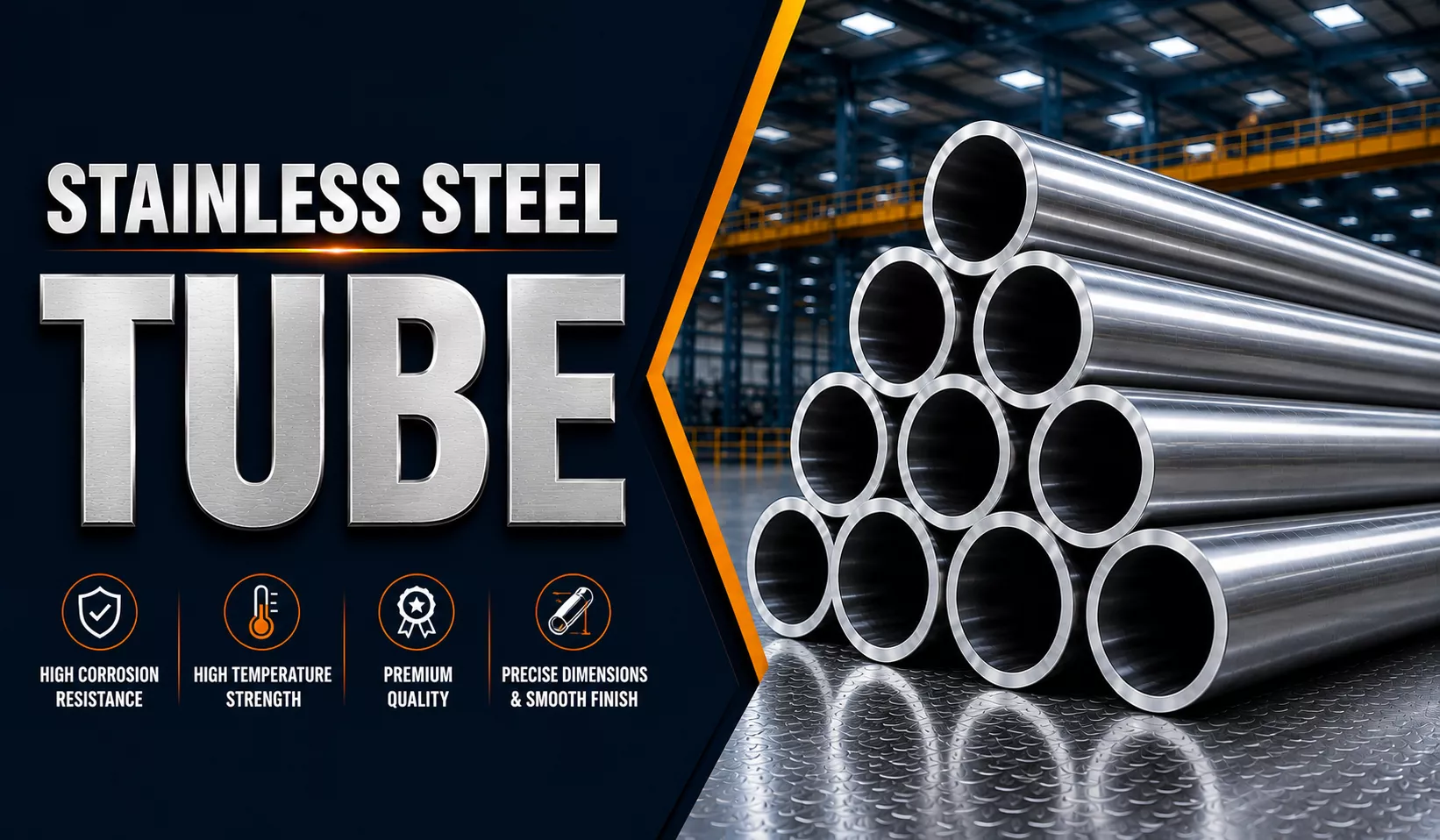
Stainless Steel Tube Manufacturers & Stockists in India
Kamal Steels supplies stainless steel tubes for industrial and engineering requirements, with product selection based on grade, dimensions, manufacturing method and applicable specifications.
Stainless steel tubes can be supplied in seamless and welded forms, depending on the required application and specification. Buyers can specify the required grade, outside diameter, wall thickness, length, surface finish and standard when requesting a quotation.
Depending on project requirements, documentation such as material test certificates, inspection reports and material traceability can be considered with the supplied tubes.
Stainless Steel Tube Specifications
Stainless Steel Tubes are specified according to the required material grade, dimensions, wall thickness, manufacturing method, surface finish and applicable product standard. The correct specification depends on the intended application and operating conditions.
| Specification | Details |
|---|---|
| Product | Stainless Steel Seamless Tubes and Stainless Steel Welded Tubes |
| Material Grades | 304, 304L, 316, 316L, 321, 310, 317L, 904L, Duplex and Super Duplex |
| Outside Diameter | Available according to applicable product standards and customer requirements |
| Wall Thickness | Available in various thicknesses depending on tube size and application |
| Manufacturing Method | Seamless and Welded |
| Length | Standard, random and cut lengths as required |
| Surface Finish | Mill finish, annealed, pickled or other finishes as applicable |
| Standards | ASTM, ASME, EN and other applicable international standards |
| Testing & Documentation | Material test certificates, dimensional inspection and other documentation as required |
Stainless Steel Tube Standards
Stainless steel tubes are manufactured and supplied according to different material and dimensional standards depending on their intended application, manufacturing method and operating conditions.
| Standard | Application / Coverage |
|---|---|
| ASTM A213 / ASME SA213 | Seamless ferritic and austenitic alloy-steel tubes for boilers, superheaters and heat exchangers. |
| ASTM A249 / ASME SA249 | Welded austenitic steel boiler, superheater, heat-exchanger and condenser tubes. |
| ASTM A269 | Seamless and welded austenitic stainless steel tubing for general corrosion-resistant and low- or high-temperature service. |
| ASTM A270 | Seamless and welded austenitic and ferritic/austenitic stainless steel sanitary tubing. |
| ASTM A554 | Welded austenitic stainless steel mechanical tubing, including round, square and rectangular sections. |
| ASTM A789 / ASME SA789 | Seamless and welded ferritic/austenitic stainless steel tubing for general corrosive service, including duplex grades. |
| ASTM A1016 / A1016M | General requirements applicable to ferritic alloy steel, austenitic alloy steel and stainless steel tubes. |
The applicable material, dimensional and testing standard should always be confirmed according to the purchase specification and intended application.
Types of Stainless Steel Tubes
| Type | Description |
|---|---|
| Stainless Steel Seamless Tube | Manufactured without a welded seam and commonly used for high-pressure, high-temperature and critical industrial applications. |
| Stainless Steel Welded Tube | Manufactured by forming stainless steel material and welding the longitudinal seam; widely used for industrial, structural and general applications. |
| Stainless Steel Round Tube | Round-section tubing used in industrial, mechanical, structural and process applications. |
| Stainless Steel Square Tube | Square-section mechanical tubing commonly used for structural, fabrication and architectural applications. |
| Stainless Steel Rectangular Tube | Rectangular-section tubing used for fabrication, structural and engineering applications. |
| Stainless Steel Heat Exchanger Tube | Stainless steel tubing designed for heat transfer in heat exchangers, condensers and industrial thermal equipment. |
| Stainless Steel Boiler Tube | Stainless steel tubing used in boilers, steam generation systems and high-temperature industrial equipment. |
| Duplex Steel Tube | Duplex stainless steel tubing offering a combination of strength and corrosion resistance for chemical, marine and industrial applications. |
| Super Duplex Steel Tube | Super duplex stainless steel tubing designed for demanding environments requiring high strength and resistance to pitting and crevice corrosion. |
Stainless Steel Tube Grades
Stainless steel tube grades are selected according to corrosion resistance, temperature, strength and application requirements.
| Grade | Key Characteristics |
|---|---|
| 304 / 304L | General corrosion resistance for industrial, food processing and fabrication applications. |
| 316 / 316L | Improved corrosion resistance, particularly in chloride-containing environments. |
| 321 | Stabilized grade suitable for elevated-temperature applications. |
| 310 | High-temperature oxidation and corrosion resistance. |
| 317L | Enhanced corrosion resistance for demanding chemical environments. |
| 904L | High corrosion resistance for aggressive process environments. |
| Duplex / Super Duplex | High strength and enhanced resistance to pitting, crevice corrosion and stress-corrosion cracking. |
Stainless Steel Tube Sizes Chart
Stainless Steel Tube Sizes are commonly specified by outside diameter (OD) and wall thickness for round tubes. The available size range depends on the tube type, grade, manufacturing method and applicable standard.
| Tube Type | Size Range | Wall Thickness | Common Applications |
|---|---|---|---|
| Small Diameter Tube | 6 mm – 25 mm OD | 0.5 mm – 2 mm | Instrumentation, precision and general applications |
| Medium Diameter Tube | 25 mm – 76 mm OD | 1 mm – 5 mm | Mechanical, fabrication and industrial applications |
| Large Diameter Tube | 76 mm – 152 mm OD | 2 mm – 10 mm | Process, structural and industrial applications |
| Special Sizes | Above 152 mm OD | As required | Project-specific and specialized applications |
Standard and custom stainless steel tube sizes may be available depending on the required grade, specification and manufacturing requirements.
Stainless Steel Tube Weight Chart
Stainless steel tube weight depends primarily on the outside diameter, wall thickness and material density. The following chart provides approximate weights for commonly used round stainless steel tube sizes.
| Outside Diameter (mm) | Wall Thickness (mm) | Approximate Weight (kg/m) |
|---|---|---|
| 12.7 | 1.0 | 0.92 |
| 19.05 | 1.5 | 2.00 |
| 25.4 | 1.5 | 2.47 |
| 38.1 | 2.0 | 5.31 |
| 50.8 | 2.0 | 7.81 |
| 76.2 | 3.0 | 16.36 |
| 101.6 | 3.0 | 22.04 |
The values shown are approximate and intended for reference. Actual stainless steel tube weight may vary depending on material grade, dimensional tolerances and manufacturing specifications.
Seamless vs Welded Stainless Steel Tubes
| Factor | Seamless Tube | Welded Tube |
|---|---|---|
| Manufacturing | Manufactured without a longitudinal welded seam. | Manufactured by forming material and welding the seam. |
| Typical Use | High-pressure, high-temperature and critical applications. | General industrial, mechanical and structural applications. |
| Size Availability | Availability depends on the manufacturing process and standard. | Available across a wide range of sizes depending on the product specification. |
| Selection | The suitable type should be selected according to service conditions, specification and project requirements. | |
304 vs 316 Stainless Steel Tubing
| Property | 304 Stainless Steel Tubing | 316 Stainless Steel Tubing |
|---|---|---|
| Corrosion Resistance | Suitable for many general corrosive environments. | Generally provides improved resistance to chlorides and corrosive environments. |
| Molybdenum | Does not contain the molybdenum addition found in 316. | Contains molybdenum to improve corrosion resistance. |
| Common Applications | General industrial, fabrication and food processing applications. | Marine, chemical processing and chloride-containing environments. |
| Selection | The final grade should be selected according to the service environment and project requirements. | |
Stainless Steel Tube Prices
Stainless steel tube prices vary according to the required grade, dimensions, wall thickness, manufacturing method, quantity and prevailing raw material market conditions.
| Price Factor | Consideration |
|---|---|
| Material Grade | Grades with higher alloy content can have different price levels. |
| Tube Size | Outside diameter and wall thickness affect the material weight and cost. |
| Manufacturing Method | Seamless and welded tubes may differ in manufacturing cost. |
| Quantity | Order quantity can affect procurement and pricing conditions. |
| Market Conditions | Raw material prices and market conditions can influence the final price. |
Stainless Steel Tube Quality & Testing
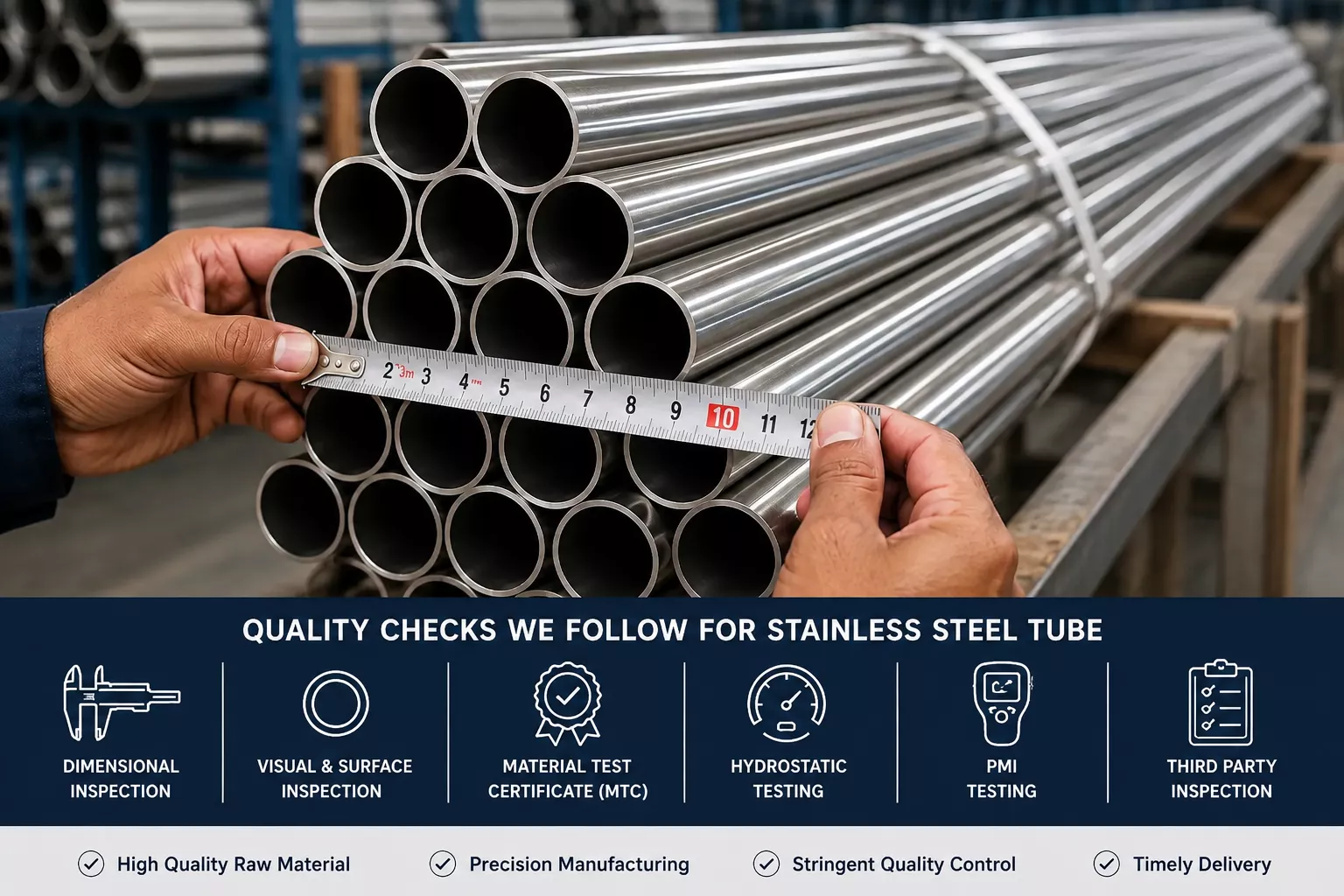
Stainless steel tube quality is verified through applicable inspection and testing requirements to confirm that the supplied material meets the specified product and project requirements.
Depending on the order specification, quality checks may include chemical composition, mechanical properties, dimensional inspection, surface inspection and applicable pressure or leak testing. Non-destructive testing may also be carried out where required by the relevant specification.
Material documentation can include Material Test Certificates (MTCs), inspection reports and traceability records, where required. These documents help buyers verify the material grade, test results and conformity with the applicable specification.
Stainless Steel Tube Applications & Industries
| Industry | Typical Applications |
|---|---|
| Oil & Gas | Instrumentation, process systems and industrial equipment. |
| Chemical Processing | Corrosion-resistant process equipment and tubing systems. |
| Power Generation | Boiler, heat-exchanger and high-temperature applications. |
| Food & Beverage | Sanitary processing and fluid handling systems. |
| Pharmaceutical | Clean process and sanitary tubing applications. |
| Marine | Corrosion-resistant equipment and tubing systems. |
How to Select the Right Stainless Steel Tube
| Selection Factor | What to Consider |
|---|---|
| Material Grade | Select according to corrosion resistance, temperature and operating environment. |
| Tube Type | Choose seamless or welded construction according to the application and specification. |
| Dimensions | Confirm the required outside diameter, wall thickness and length. |
| Applicable Standard | Confirm the ASTM, ASME or other applicable product specification. |
| Documentation | Determine whether material test certificates, inspection reports or traceability are required. |
Why Choose Kamal Steels for Stainless Steel Tubes?
| Capability | Support for Buyers |
|---|---|
| Product Range | Stainless steel seamless, welded, round, square and other tube options for different applications. |
| Grade Selection | Support in identifying suitable grades according to technical and application requirements. |
| Specifications | Supply support based on required dimensions, wall thicknesses and applicable standards. |
| Documentation | Material test certificates, inspection documents and traceability can be considered according to requirements. |
| Supply Support | Support for project requirements, repeat orders and industrial procurement needs. |
Frequently Asked Questions About Stainless Steel Tubes
A stainless steel tube is a hollow cylindrical, square or rectangular product manufactured from stainless steel. It is commonly specified by its outside diameter and wall thickness and is used for industrial, mechanical, structural, heat-transfer and fluid-handling applications.
Stainless steel tube is primarily made from iron alloyed with chromium, which provides corrosion resistance. Depending on the grade, it may also contain nickel, molybdenum, carbon, manganese and other alloying elements.
Stainless steel tubes are used in industries such as oil and gas, chemical processing, power generation, food processing, pharmaceutical, marine, construction and engineering. Common applications include heat exchangers, instrumentation, process systems and structural fabrication.
Stainless steel pipe is generally specified by nominal pipe size and schedule, while stainless steel tube is commonly specified by outside diameter and wall thickness. Pipes are often used for fluid transport, whereas tubes are widely used in mechanical, structural, heat-exchanger and precision applications.
Stainless steel round tube is generally measured by outside diameter, wall thickness and length. Square and rectangular tubes are measured by their outside dimensions, wall thickness and length.
Stainless steel tubing is available in a wide range of outside diameters and wall thicknesses. Standard sizes vary according to the product type and applicable specification, such as ASTM A213, A249, A269 or A554.
Stainless Steel 316 generally provides better corrosion resistance than 304 because it contains molybdenum. Grade 316 is commonly preferred for chloride-containing, marine and more corrosive environments, while 304 is suitable for many general applications.
Grade 304 is commonly suitable for many outdoor environments. Grade 316 is generally preferred for coastal, marine or chloride-rich locations because of its improved corrosion resistance. The best grade depends on the specific environmental conditions.
Yes, many stainless steel tubes can be welded using suitable welding processes and filler materials. The welding procedure should be selected according to the stainless steel grade, wall thickness and intended application.
A seamless stainless steel tube is manufactured without a longitudinal welded seam, while a welded tube is produced by forming stainless steel material and welding the seam. The appropriate type depends on pressure, temperature, application requirements and the applicable specification.
Stainless steel tube can be bent using tube bending equipment such as rotary draw, compression or roll bending machines. The correct method depends on the tube diameter, wall thickness, bend radius and stainless steel grade. Proper tooling helps prevent flattening or cracking.
Stainless steel tube can be polished using suitable abrasive belts, wheels or polishing compounds, progressing from coarser to finer abrasives to achieve the required surface finish. The polishing method should be selected according to the desired finish and application.
Stainless steel tube can be drilled using a suitable sharp drill bit, controlled cutting speed and appropriate cutting fluid. Excessive speed and heat should be avoided, as stainless steel can work-harden during drilling.
Stainless steel tube can be cut using methods such as band sawing, abrasive cutting, tube cutting or other suitable fabrication processes. The selected method should produce a clean cut while minimizing heat damage and burrs.
Stainless steel tube cost depends on factors such as material grade, outside diameter, wall thickness, manufacturing method, quantity, required specification and current raw material market prices. A quotation should be requested based on the exact product requirement.