
-
-
-
Girgaon, Mumbai - 400004
Stainless Steel Round Tube Manufacturer in India
Stainless Steel Round Tubing is a crucial component for industrial applications requiring corrosion resistance, structural durability and performance in harsh environments. Its metal composition combines iron, chromium and nickel, forming a protective layer that resists oxidation. It is widely used in construction, the automotive and aerospace industries and food processing.
The growing need for reliable materials in corrosive environments has made stainless steel round tubing a focal point in engineering and procurement decisions. Companies across various sectors are increasingly seeking industrial piping solutions capable of withstanding severe conditions without compromising safety or equipment longevity.
Unlike materials such as carbon steel or aluminium, stainless steel round tubing offers a rare combination of mechanical strength, relative lightness and corrosion resistance. This versatility explains why it has become the standard for everything from architectural structures to corrosion-resistant piping systems in chemical plants.
What Is Stainless Steel Round Tubing?
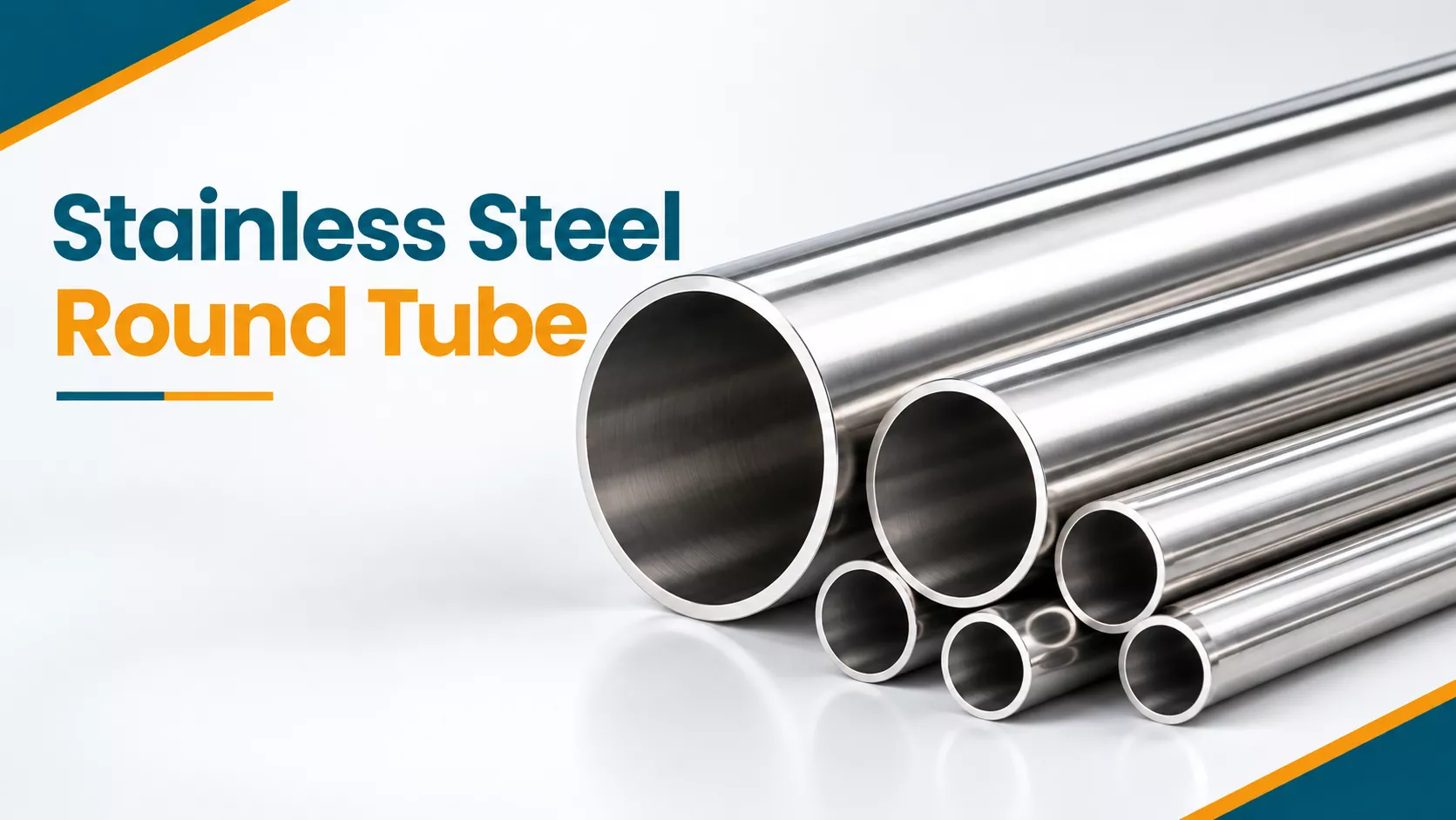
Stainless steel round tubing is a cylindrical metal profile made from alloys of iron, chromium, and often nickel and molybdenum. Chromium forms a thin, protective oxide layer on the surface, helping the material resist corrosion and oxidation.
The round shape is widely used in structural and fluid-handling applications because it distributes stress around the circumference and supports the efficient flow of liquids and gases. Its geometry also makes it suitable for welding, bending, and integration into industrial systems.
Comparison of Common Stainless Steel Alloys
The following table compares commonly used stainless steel grades and duplex alloys based on their key properties and typical applications.
| Alloy Grade | Key Feature | Typical Applications |
|---|---|---|
| 304 | Good general corrosion resistance and cost-effectiveness | General industrial use, food processing, and architecture |
| 316 | Improved resistance to pitting and corrosion in chloride-containing environments due to molybdenum | Marine equipment, chemical processing, and pharmaceutical facilities |
| 321 | Titanium-stabilised grade with good resistance to intergranular corrosion after exposure to elevated temperatures | Aerospace components, exhaust systems, and high-temperature equipment |
| Duplex Stainless Steel | Austenitic-ferritic structure offering high strength and good resistance to pitting corrosion | Oil and gas facilities, offshore equipment, and chemical processing |
What Are the Key Standards and Specifications for Stainless Steel Tubing?
Choosing the correct stainless steel round tubing depends on understanding the technical standards that govern its manufacture. Some of the most relevant standards in the industrial sector include ASTM A269 for general-service and instrumentation tubing, ASTM A213 for heat exchanger and boiler tubes, and ASTM A312 for stainless steel pipes used in demanding industrial environments.
Welded vs Seamless Tubing
Seamless tubes are manufactured from solid billets through processes such as piercing and subsequent rolling or drawing, without a longitudinal weld seam. They are commonly selected for applications requiring specific pressure ratings, dimensional accuracy, or reliable performance under demanding operating conditions.
Welded tubes are manufactured by forming stainless steel sheets or strips into a round shape and joining the edges through welding. They can offer a cost-effective option for applications where the specified material grade, dimensions, manufacturing standard, and service conditions permit their use.
When selecting stainless steel round tubing for corrosive environments, Grade 316 generally offers better resistance to chloride-induced pitting than Grade 304 because it contains molybdenum. Duplex stainless steel grades can provide higher mechanical strength and improved pitting resistance, depending on the grade and operating conditions. The final selection should consider the chemical environment, temperature, pressure, and applicable material specification.
What Are the Advantages of Stainless Steel Round Tubing?
Corrosion Resistance
Compared to carbon steel, which may require protective coatings to resist corrosion, stainless steel offers inherent corrosion resistance through its protective chromium oxide layer. Its performance in humid, chemical, and saltwater environments depends on the selected grade and operating conditions.
Durability and Longevity
The combination of mechanical strength and corrosion resistance can extend service life in industrial installations, reducing replacement frequency and minimising maintenance downtime when the material is correctly specified.
Aesthetic Appeal
Stainless steel is valued for its clean finish in architectural applications and environments requiring high hygiene standards. Smooth surfaces can simplify cleaning and help reduce residue accumulation in food and beverage processing equipment.
These benefits can justify a higher initial investment, particularly when long-term maintenance and replacement costs are considered.
In Which Sectors Is Stainless Steel Round Tubing Most Commonly Used?
Stainless steel round tubing is used across several industries because of its corrosion resistance, mechanical properties, and suitability for different operating conditions.
Construction
Stainless steel round tubes are used in handrails, architectural structures, supports, and selected hydraulic systems where durability and corrosion resistance are important.
Automotive Industry
Automotive applications include exhaust systems and structural components that require resistance to heat, vibration, and exposure to road salts.
Aerospace
Selected stainless steel grades, including Grade 321, are used in aerospace components and high-temperature assemblies where thermal stability and mechanical performance are required.
Food and Beverage Processing
Stainless steel tubing is used in hygienic processing equipment and fluid-handling systems because suitable grades offer corrosion resistance and surfaces that can be cleaned effectively.
How Is Stainless Steel Round Tubing Manufactured?
Stainless steel round tubing is manufactured using seamless or welded production methods. Seamless tubes are produced from solid billets through processes such as piercing, rolling, and drawing. Welded tubes are formed from stainless steel strip or sheet, followed by edge welding.
Depending on the grade and product specification, subsequent operations may include heat treatment, sizing, straightening, surface finishing, pickling, and passivation. These processes help achieve the required dimensions, mechanical properties, and surface condition.
When evaluating manufacturers, check the applicable product standard, material test certificates, traceability, and relevant quality approvals. ISO 9001 relates to quality management systems, while PED requirements and ASME qualifications apply to specific products, equipment, or manufacturing activities where relevant.
How to Choose the Ideal Stainless Steel Round Tubing for Your Project?
Selecting the right stainless steel round tubing requires evaluating the project's technical requirements and operating environment.
- Diameter and wall thickness: Match the specified dimensions to the required flow rate, design pressure, and installation requirements.
- Alloy grade: Select a grade based on corrosion resistance, mechanical properties, and temperature requirements.
- Operating environment: Consider exposure to chemicals, chlorides, saltwater, and elevated temperatures.
- Mechanical loads: Assess tensile strength, fatigue, vibration, and structural loading where applicable.
- Applicable standards: Confirm the required ASTM or ASME specification, dimensional tolerances, testing, and documentation.
Grade 316 is often preferred over Grade 304 for environments involving chloride exposure, while suitable duplex grades may be selected when higher strength and pitting resistance are required. Grade 304 can be appropriate for less aggressive environments. Final selection should be based on the actual service conditions and engineering requirements.
How to Extend the Life of Stainless Steel Round Tubing?
Preventive maintenance helps preserve the performance and service life of stainless steel round tubing. Recommended practices include:
- Clean surfaces regularly to remove deposits, contaminants, and substances that could contribute to pitting corrosion.
- Inspect welds, joints, supports, and connections for signs of corrosion, cracking, or deterioration.
- Avoid unsuitable chlorine-based cleaning agents and prolonged exposure to concentrated chlorides.
- Use cleaning products and procedures compatible with the selected stainless steel grade.
- Allow for thermal expansion in high-temperature installations to prevent excessive stress on the tubing and its supports.
Is Stainless Steel Round Tubing Worth the Investment?
Stainless steel round tubing generally has a higher initial purchase cost than carbon steel. However, its corrosion resistance, durability, and potentially lower maintenance requirements can reduce total cost of ownership over the service life of an installation.
For companies operating in corrosive environments or handling products where contamination must be controlled, the appropriate stainless steel grade can offer long-term reliability. The overall value depends on the material grade, operating conditions, maintenance requirements, and expected service life.
How to Choose a Reliable Stainless Steel Tubing Supplier?
Choosing a reliable stainless steel tubing supplier involves evaluating product quality, material traceability, technical support, and the ability to meet project specifications.
Before placing an order, consider the following factors:
- Product specifications: Confirm the grade, outside diameter, wall thickness, length, manufacturing method, and applicable standard.
- Quality documentation: Request material test certificates, inspection reports, and traceability records where required.
- Quality approvals: Verify relevant certifications and manufacturing qualifications for the specific product and application.
- Stock availability: Check available sizes, grades, quantities, and delivery schedules.
- Technical support: Look for clear documentation and assistance with material selection and project requirements.
Kamal Steels supplies stainless steel products for industrial requirements. Contact the team to enquire about stainless steel round tubing availability, grades, dimensions, and technical documentation, or explore the relevant product pages to identify options for your application.
Stainless Steel Round Tubing FAQs
Kamal Steels supplies stainless steel products for industrial applications. Buyers should confirm the availability of the required round tube grade, applicable product standards, material test certificates, inspection reports, and traceability documentation when placing an order.
Select the grade based on corrosion exposure, operating temperature, and mechanical requirements. Choose the outside diameter and wall thickness according to the required flow rate, design pressure, and installation constraints. Confirm the applicable material specification and dimensional requirements before ordering.
Stainless steel round tube is generally specified by its outside diameter and wall thickness, with dimensional tolerances suited to the intended application. Stainless steel pipe is commonly specified by nominal pipe size (NPS) and schedule or wall thickness. Tubing is often used in instrumentation, heat exchangers, and structural applications, while pipe is widely used for fluid transport. The applicable product standard determines the exact requirements.
Stainless steel round tube offers a combination of corrosion resistance, mechanical strength, durability, and a clean surface finish. Compared with carbon steel, it can reduce corrosion-related maintenance in suitable environments. Compared with aluminium, it generally offers higher strength and better performance in some demanding service conditions. The best material depends on the application, operating environment, weight requirements, and budget.
Stainless steel round tube is a hollow cylindrical product manufactured from corrosion-resistant stainless steel alloys containing chromium and, depending on the grade, nickel, molybdenum, or other alloying elements. It is used in industrial equipment, heat exchangers, instrumentation, food processing, automotive components, architectural structures, and fluid-handling systems.
Grade 316 and suitable duplex stainless steel grades are commonly selected for environments involving chlorides, saltwater, or aggressive chemicals. Grade 316 contains molybdenum, which improves resistance to pitting compared with Grade 304. Duplex grades can offer higher mechanical strength and improved pitting resistance, depending on the specific grade and service conditions.
The ideal diameter depends on the required flow rate, operating pressure, wall thickness, connection requirements, and available installation space. Select dimensions according to the intended application and applicable product specification, such as ASTM A269 for certain general-service and instrumentation tubing or ASTM A213 for boiler, superheater, and heat-exchanger tubes. ASTM A312 applies to specified stainless steel pipe products.
Seamless tubing is manufactured without a longitudinal weld seam, typically using processes such as billet piercing and subsequent rolling or drawing. Welded tubing is formed from stainless steel strip or sheet and joined by welding. Both types can be suitable for industrial applications when their material grade, dimensions, manufacturing standard, and pressure requirements meet the project specifications.
Stainless steel round tubing generally costs more initially than carbon steel tubing. However, its corrosion resistance and potentially lower maintenance and replacement requirements can reduce total ownership costs over time. The actual cost advantage depends on the operating environment, material grade, installation, and expected service life.
ISO 9001 certification indicates that an organisation operates a quality management system within its certified scope. PED compliance may be relevant for equipment covered by the Pressure Equipment Directive, while ASME certifications or qualifications apply to specific codes, products, and activities. Buyers should also verify material test certificates, inspection documentation, product-standard compliance, and material traceability as required for their project.