
-
-
-
Girgaon, Mumbai - 400004
Duplex Steel Tube Manufacturer in India
Duplex Steel Tubing is made from ferritic-austenitic stainless steel, combining high mechanical strength with resistance to several forms of corrosion. Grades such as 2205, 2507 and 2304 are used in chemical processing, oil and gas, marine equipment and other demanding applications. The correct grade depends on the operating environment, design requirements and applicable material specification.
Kamal Steels is a Manufacturer and Stockist of Duplex Steel Tubes in India, offering grades such as UNS S31803, S32205 (2205), S32750 (2507) and S32304 (2304). These ferritic-austenitic stainless steel tubes combine high mechanical strength with corrosion resistance for demanding applications in oil and gas, chemical processing, marine equipment and heat exchangers. Availability, dimensions and testing documentation depend on the required grade and applicable material specification.
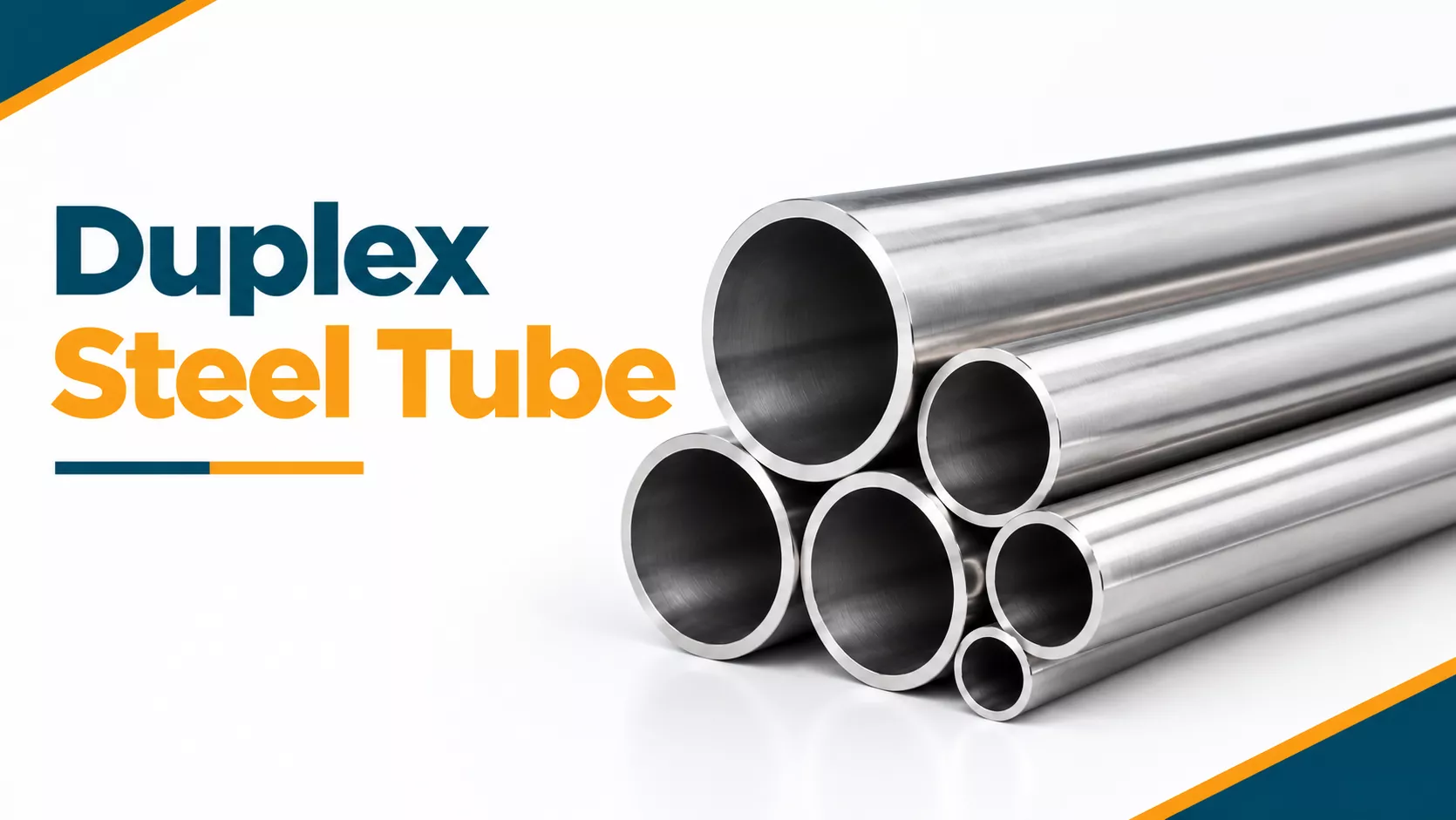
What Is Duplex Steel Tubing?
Duplex steel tubing is manufactured from ferritic-austenitic stainless steel. Its microstructure contains two principal phases: ferrite and austenite. When properly produced and heat-treated, this structure provides a useful balance of strength, toughness and corrosion resistance.
Compared with many conventional austenitic stainless steel grades, duplex grades can provide higher yield strength and improved resistance to chloride-induced stress corrosion cracking. Actual performance depends on the grade, manufacturing condition, surface finish and operating environment.
Duplex steel tubes are available in seamless and welded forms, depending on the grade, dimensions, manufacturing requirements and applicable product specification.
Key Characteristics of Duplex Steel Tubes
- High yield strength compared with many common austenitic stainless steels.
- Good resistance to pitting and crevice corrosion in suitable chloride-containing environments.
- Improved resistance to chloride stress corrosion cracking in many applications.
- Useful toughness and mechanical performance when correctly manufactured and processed.
- Potential to reduce component weight where engineering calculations permit thinner sections.
Duplex Steel Microstructure and Properties
The defining feature of duplex stainless steel is its ferritic-austenitic microstructure. The phase balance is controlled through alloy composition, heat treatment and manufacturing practices. A nominally balanced structure is a general description, not a guarantee that every finished product contains exactly 50% of each phase.
Chromium contributes to corrosion resistance, while molybdenum and nitrogen improve resistance to localized corrosion in many duplex grades. Nickel helps stabilize the austenitic phase. The exact contribution of each element depends on the alloy grade.
Properties Buyers Should Review
| Property | Why It Matters |
|---|---|
| Yield and tensile strength | Used to evaluate mechanical performance against the design specification. |
| Pitting and crevice corrosion resistance | Important in chloride-containing liquids and marine environments. |
| Stress corrosion cracking resistance | Relevant where tensile stress and a susceptible corrosive environment occur together. |
| Weldability | Requires suitable procedures to preserve the required microstructure and properties. |
| Temperature limits | Service suitability must be assessed for the specific grade and operating conditions. |
Material selection should be based on the relevant design code, product specification, operating conditions and verified material data rather than a general corrosion-resistance claim alone.
Duplex Steel vs Stainless Steel 304 and 316
Duplex 2205 is often considered when a project requires higher strength and better resistance to chloride-related corrosion than common stainless steel grades can provide. Stainless steel 304 and 316 remain suitable for many applications, depending on the fluid, temperature, cleaning requirements and exposure conditions.
| Comparison | Duplex 2205 | Stainless Steel 304 | Stainless Steel 316 |
|---|---|---|---|
| Material family | Ferritic-austenitic | Austenitic | Austenitic |
| Typical strength | Higher yield strength in common product specifications | Generally lower yield strength than 2205 | Generally lower yield strength than 2205 |
| Chloride-related corrosion | Often suitable for more demanding chloride service | Limited suitability in many chloride environments | Improved over 304 in many environments, but not immune to chloride attack |
| Stress corrosion cracking | Generally better resistance in many chloride environments | Can be susceptible under certain conditions | Can be susceptible under certain conditions |
| Typical selection | Higher-strength industrial and chloride service | General corrosion-resistant applications | Applications requiring improved corrosion resistance over 304 |
Important: This is a qualitative comparison, not a substitute for grade-specific design values. Strength, corrosion resistance and suitability must be confirmed against the applicable standard and actual service conditions.
What Are the Types of Duplex Steel Tubes?
Duplex stainless steels are grouped into lean duplex, standard duplex and super duplex families. Their alloy contents and performance differ, so these grades should not be treated as interchangeable.
1. Standard Duplex Steel Tube — 2205
Duplex 2205 is a widely used grade for industrial equipment requiring a combination of strength and corrosion resistance. Common designations include UNS S32205 and UNS S31803. These designations are related but should not automatically be treated as identical for every chemical-composition requirement; the purchase specification should identify the required grade.
- Typical applications: chemical processing, oil and gas equipment, heat exchangers and selected marine systems.
- Selection considerations: chloride concentration, temperature, mechanical loading and fabrication requirements.
2. Super Duplex Steel Tube — 2507
Super duplex 2507, commonly designated UNS S32750, has higher chromium, molybdenum and nitrogen contents than standard duplex grades. It is used where demanding localized-corrosion resistance and high strength are required.
- Typical applications: offshore equipment, seawater systems, desalination plants and selected chemical-processing services.
- Selection considerations: seawater chemistry, operating temperature, crevice conditions and project-specific qualification requirements.
3. Lean Duplex Steel Tube — 2304
Lean duplex 2304, commonly designated UNS S32304, has lower alloying additions than standard duplex 2205. It can be a practical option for applications requiring duplex strength and corrosion performance without the full alloy content of 2205.
- Typical applications: structural components, tanks and selected industrial equipment.
- Selection considerations: the required corrosion resistance must be verified for the actual service environment.
| Grade family | Common grade | UNS designation | Typical selection focus |
|---|---|---|---|
| Lean duplex | 2304 | S32304 | Strength and corrosion resistance for suitable moderate-duty environments |
| Standard duplex | 2205 | S32205 / S31803, as specified | General industrial service requiring a balance of strength and corrosion resistance |
| Super duplex | 2507 | S32750 | More demanding localized-corrosion environments |
What Are the Standard Sizes and Dimensions of Duplex Steel Tubes?
Duplex steel tubes are specified by their outside diameter, wall thickness and length. The available dimensional range depends on the grade, manufacturing route, product specification and supplier's production or stock range.
Information Used to Specify Tube Dimensions
| Parameter | What to Specify |
|---|---|
| Outside diameter (OD) | Required tube diameter in millimetres or inches. |
| Wall thickness | Nominal or specified wall thickness, including any minimum-wall requirement. |
| Length | Standard, random or cut length as required by the order. |
| Manufacturing route | Seamless or welded, according to the product specification and application. |
| Dimensional tolerances | Applicable product standard and purchase-order requirements. |
| End finish | Plain ends or another agreed finish appropriate to the application. |
Do not assume that every diameter and wall thickness is available in every duplex grade. Confirm the actual size range, tolerances, manufacturing method and delivery availability when requesting a quotation.
What Are the Benefits of Duplex Steel Tubing?
High Mechanical Strength
Many duplex grades have higher yield strength than common austenitic stainless steel grades. This can allow a design to use a thinner section where engineering calculations code requirements and corrosion allowances permit it.
Resistance to Localized Corrosion
Duplex grades such as 2205 and 2507 can offer strong resistance to pitting and crevice corrosion in suitable chloride-containing environments. Actual performance depends on the grade and service conditions.
Resistance to Chloride Stress Corrosion Cracking
Duplex stainless steels generally provide improved resistance to chloride stress corrosion cracking compared with many conventional austenitic grades. They are not immune to every form of corrosion or cracking.
Potential Lifecycle Benefits
Where the alloy is properly selected and fabricated, its strength and corrosion performance can reduce maintenance or replacement needs. Lifecycle savings are application-specific and should be evaluated against initial material, fabrication and inspection costs.
Which Industries Use Duplex Steel Tubes?
Oil and Gas Industry
Duplex tubing is used in selected process systems, heat exchangers and oil and gas equipment where strength and resistance to corrosive fluids are required. Offshore and subsea applications need careful qualification against the operating environment and design requirements.
Chemical and Petrochemical Industry
Duplex tubes can be selected for equipment that handles corrosive process fluids. Compatibility must be checked against the actual chemicals, concentration, temperature, pressure and contamination risks.
Marine and Desalination Systems
Duplex and super duplex grades are used in suitable marine equipment, seawater systems and desalination installations. Crevices, deposits, stagnant conditions and water chemistry can affect performance.
Heat Exchangers
Duplex tubing can be used in selected heat-transfer equipment where mechanical strength and corrosion resistance are important. The grade must meet the design code and the heat exchanger's specified tube requirements.
Pulp and Paper Industry
Some pulp and paper processes use duplex stainless steel components where the process chemistry and mechanical demands suit the selected grade. Chemical compatibility should be assessed for each service.
Power and Industrial Equipment
Duplex tubes may be used in auxiliary systems, fluid handling equipment and industrial installations where the combination of strength and corrosion resistance is beneficial. The material must be approved for the particular service and code.
Which Standards Apply to Duplex Steel Tubes?
The applicable specification defines requirements for chemical composition, mechanical properties, manufacturing, dimensions and testing. Always confirm the exact standard and edition in the purchase order rather than relying on a general statement that a product is ASTM or ASME compliant.
ASTM A789/A789M
ASTM A789/A789M covers seamless and welded ferritic-austenitic stainless steel tubing for general service. It includes requirements for specified grades and tests. The grade, product form and ordered requirements must match the intended application.
Related Specifications
- ASTM A790/A790M: commonly referenced for seamless and welded ferritic-austenitic stainless steel pipe. It is a pipe specification, not a replacement for a tube specification where A789 is required.
- ASME requirements: the applicable ASME material specification and design code depend on the equipment, service and project requirements. Confirm the required designation and edition with the project engineer.
Documents and Quality Checks
- Material Test Certificate (MTC) identifying the grade and heat or lot number.
- Chemical composition and mechanical test results required by the specification.
- Dimensional inspection and verification of applicable tolerances.
- Heat-number identification and traceability throughout handling and delivery.
- Additional non-destructive, corrosion or inspection tests when specified by the purchase order.
Not every order requires the same set of supplementary tests. Confirm acceptance criteria, inspection stages and documentation before placing the order.
How to Choose the Right Duplex Steel Tube
Choosing a duplex tube involves more than selecting a grade name. Engineers and buyers should evaluate the operating conditions, required dimensions, manufacturing route and documentation.
- Define the service environment. Record the fluid composition, chloride level, temperature, pressure, flow conditions and possible deposits or crevices.
- Confirm the grade. Compare 2304, 2205 and 2507 against the required corrosion resistance and mechanical properties.
- Specify the product standard. State the required tube specification and edition, along with the UNS grade.
- Set dimensions and tolerances. Include outside diameter, wall thickness, length and any minimum-wall requirements.
- Choose the manufacturing route. Specify seamless or welded tube according to the design and procurement documents.
- List testing and documentation. Identify required certificates, inspections and supplementary tests in the enquiry.
- Review fabrication requirements. Confirm welding procedures, forming requirements and any restrictions relevant to the selected grade.
How to Choose a Duplex Steel Tube Supplier
Supplier evaluation should cover technical conformity, traceability and the ability to fulfil the actual order. Avoid relying on a general claim of certification without checking the relevant documents.
Technical and Quality Criteria
- Ability to supply the specified grade, tube dimensions and manufacturing type.
- Material Test Certificates and traceability records appropriate to the order.
- Evidence of compliance with the specified product standard and inspection requirements.
- Clear identification of any deviations, substitutions or limitations.
Commercial Criteria
- Confirmed stock or production availability for the required sizes.
- Quotation based on the full material and dimensional specification.
- Agreed delivery schedule, packaging and shipping terms.
- Responsive support for technical clarification and documentation.
Buyer Checklist Before Placing an Order
- Is the grade and UNS designation clearly specified?
- Does the quotation identify the applicable tube standard?
- Are OD, wall thickness, length and tolerances confirmed?
- Will the required MTC and traceability documentation be supplied?
- Are additional inspection and testing requirements agreed in writing?
- Are delivery schedule, packaging and shipping terms clear?
Duplex Steel Tubes from Kamal Steels
Kamal Steels supplies stainless steel and alloy products for industrial procurement. For duplex steel tube enquiries, specify the required grade, dimensions, manufacturing route, applicable standard, quantity and inspection requirements so that the order can be evaluated against your project needs.
Availability and lead time depend on the grade, size and order requirements. Confirm product documentation and any requested testing before finalising the purchase.
Duplex Steel Tube FAQs
A duplex steel tube is a hollow product made from ferritic-austenitic stainless steel. Its two-phase microstructure combines high mechanical strength with corrosion resistance, depending on the grade and operating environment.
Duplex 2205, commonly designated UNS S32205 or S31803, is used in many industrial applications requiring strength and corrosion resistance. Super duplex 2507, UNS S32750, has higher alloy content and generally offers greater resistance to pitting and crevice corrosion. Grade selection depends on the service environment and project specification.
Duplex steel tubing is used in chemical processing, oil and gas equipment, heat exchangers, marine systems, desalination plants and other industrial applications requiring a combination of mechanical strength and corrosion resistance.
ASTM A789/A789M covers seamless and welded ferritic-austenitic stainless steel tubing for general service. The required grade, dimensions, manufacturing method and applicable specification edition should be confirmed in the purchase order.
Duplex stainless steels can provide good resistance to chloride-related corrosion, while super duplex grades are often considered for more demanding seawater applications. Performance depends on water chemistry, temperature, flow, deposits and crevice conditions.
Lean duplex stainless steel has lower alloying additions than standard duplex grades such as 2205. Grade 2304, designated UNS S32304, is a common example. It is suitable for applications where its specific strength and corrosion-resistance properties meet the design requirements.
Check the grade designation, heat or lot identification, Material Test Certificate (MTC), chemical composition and mechanical test results. Confirm that the documents and product identification meet the applicable material specification and purchase requirements.
The price depends on the grade, outside diameter, wall thickness, length, seamless or welded construction, order quantity, testing requirements, documentation and delivery terms. Provide the complete specification when requesting a quotation.
Yes. Duplex stainless steel tubes can be welded using suitable procedures, filler materials and heat-input controls. The welding procedure must account for the specific grade and maintain the required microstructure and material properties.
Specify the UNS grade, product standard, outside diameter, wall thickness, length, quantity, seamless or welded requirement, end finish, testing and inspection requirements, documentation and delivery destination.
Conclusion
Duplex steel tubing offers a combination of mechanical strength and corrosion resistance for a range of industrial applications. Standard duplex 2205, super duplex 2507 and lean duplex 2304 serve different requirements, so selection should be based on the actual service environment, design code and specified product standard.
For procurement, confirm the grade, dimensions, manufacturing route, testing requirements and traceability documents before placing an order. ASTM A789/A789M is an important reference for seamless and welded ferritic-austenitic stainless steel tubing for general service.