
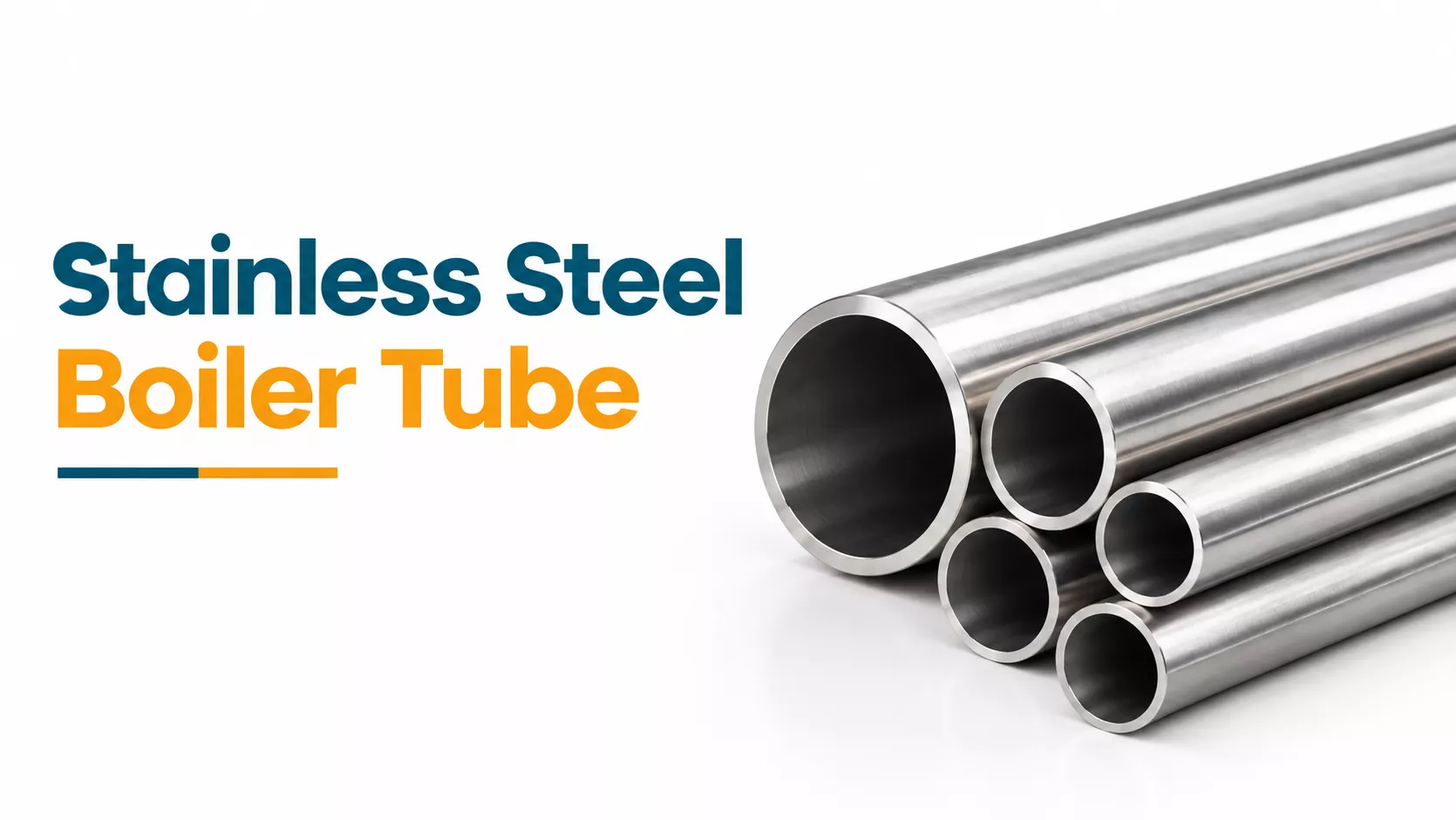
Stainless Steel Boiler Tube Manufacturer in India

Kamal Steels handles enquiries for stainless steel boiler tubes and related thermal-equipment tubing requirements. Buyers can enquire about specified grades, dimensions, wall thicknesses, applicable ASTM standards, material documentation and current availability.

Stainless steel boiler tubes are used in boilers, superheaters and heat exchangers designed for defined pressure and temperature conditions. The correct tube must meet the equipment design, material specification, operating environment and inspection requirements.

For a quotation, provide the required grade designation, applicable standard, outside diameter, wall thickness, length, quantity and delivery location. Availability and documentation should be confirmed against the specific order requirements.

Stainless Steel Boiler Tube

What Is a Stainless Steel Boiler Tube?

A stainless steel boiler tube is a tubular product manufactured for service in thermal equipment such as boilers, superheaters and heat exchangers. Depending on the equipment design, tubes may carry water, steam, or other process fluids and may be exposed to elevated temperatures, internal pressure, thermal cycling and corrosive conditions.

Material selection is critical because tube performance depends on more than corrosion resistance alone. The specified grade, wall thickness, manufacturing quality, dimensional tolerances and applicable design code must all be appropriate for the intended operating conditions.

Key Characteristics

  • Corrosion resistance: Stainless steel grades offer different levels of resistance to oxidation and corrosion, depending on their composition and environment.
  • Temperature performance: Suitable grades can be selected for elevated-temperature service within their specified limits.
  • Mechanical properties: Strength and ductility must meet the requirements of the application and governing specification.
  • Traceability: Required material documentation helps buyers verify the supplied product against the purchase specification.

Seamless vs. Welded Stainless Steel Tubes

Seamless and welded tubes differ in how they are manufactured. The appropriate product depends on the governing specification, pressure and temperature conditions, inspection requirements and equipment design. A manufacturing method should not be selected on price alone.

Feature Seamless Tubes Welded Tubes
Manufacturing process Produced from a solid billet using processes such as piercing and rolling or drawing. Formed from strip or plate and joined along a welded seam.
Longitudinal weld seam Absent Present
Product selection Must meet the specified grade, dimensions and applicable product standard. Must meet the specified grade, weld quality, inspection and applicable product standard.
Cost considerations Depends on grade, dimensions, production route and availability. Depends on grade, dimensions, weld requirements, testing and availability.
Boiler application suitability Specified seamless products, such as those covered by ASTM A213, are used for applicable boiler, superheater and heat-exchanger duties. Suitable only when the applicable equipment design and product specification permit the particular welded product.

Important: ASTM A213/A213M covers seamless ferritic and austenitic alloy-steel and stainless-steel tubes. Do not assume that a welded tube meets ASTM A213 or is acceptable for a boiler application without verifying the relevant specification.

What Are the Main Stainless Steel Boiler Tube Grades?

Stainless steel grades differ in chemical composition, corrosion resistance, mechanical properties and high-temperature performance. The grade must be selected according to the design conditions and applicable material specification. A general-purpose stainless steel grade should not automatically be treated as suitable for every boiler duty.

Material General Characteristics Selection Considerations
SS 304L / TP304L Low-carbon austenitic stainless steel grade. Verify the specified grade, mechanical requirements and suitability for the intended service.
SS 316L / TP316L Low-carbon, molybdenum-bearing austenitic stainless steel. Evaluate fluid chemistry, temperature and applicable design requirements.
Other austenitic grades Some grades are developed for particular corrosion or elevated-temperature service conditions. Select the exact grade required by the relevant specification and engineering design.
Duplex stainless steel Combines austenitic and ferritic microstructures and can offer higher strength and good resistance to certain forms of corrosion. Confirm suitability for the specific temperature range, fabrication process and applicable product standard.

How to Select the Appropriate Grade

  • Identify the design pressure and operating temperature.
  • Review the fluid composition, water chemistry and potential corrosion mechanisms.
  • Check the governing construction code and required material specification.
  • Verify mechanical properties, heat-treatment requirements and testing criteria.
  • Confirm material traceability and the documentation required for the project.

Grade designations such as SS 304 and SS 316 are commonly used in general discussions. For a boiler tube purchase, use the exact grade designation specified in the applicable standard, such as TP304 or TP316 where relevant.

What Does ASTM A213 Specify for Boiler Tubes?

ASTM A213/A213M covers seamless ferritic and austenitic alloy-steel and stainless-steel tubes intended for specified boiler, superheater and heat-exchanger applications. It establishes requirements for covered material grades, including chemical composition, mechanical properties, dimensions and applicable testing.

The relevant grade, standard edition, supplementary requirements and purchase-order conditions should be reviewed together. Referencing ASTM A213 alone does not establish that a tube is suitable for every pressure, temperature, or boiler design.

ASTM A213 vs. ASTM A312

Specification General Scope Key Point
ASTM A213 / A213M Seamless ferritic and austenitic alloy-steel and stainless-steel tubes for specified boiler, superheater and heat-exchanger applications.

The required material grade and product specification must be confirmed against the equipment design and purchase order. ASTM A213/A213M specifies covered seamless tube products; welded products must comply with a specification applicable to that product and service.

ASTM A312 / A312M Specified seamless, welded and heavily cold-worked austenitic stainless steel pipe. Pipe and boiler-tube specifications are not interchangeable.

Material Test Certificates and Inspection

Depending on the project, buyers may require a material test certificate, chemical and mechanical test results, heat-number traceability, dimensional inspection and specified non-destructive testing. Confirm the required documents and inspection scope in the purchase order before placing the order.

What Sizes and Specifications Are Available?

Stainless steel boiler tubes are specified by their outside diameter, wall thickness, length, material grade and applicable standard. The required dimensions depend on the equipment design, operating conditions, fabrication details and engineering calculations.

Specification Parameter What to Confirm
Material grade Exact grade designation and applicable product specification.
Outside diameter Required diameter and dimensional tolerance.
Wall thickness Specified nominal thickness and permitted tolerance.
Length Required cut length or standard length and its tolerance.
Manufacturing method Seamless or another permitted product type as required by the specification.
Testing and documents Material certificates, inspection, testing and traceability requirements.

What Are U-Bend Boiler Tubes?

U-bend tubes are straight tubes bent into a U-shaped configuration for use in certain heat exchangers and thermal equipment. The bend radius, dimensions, material condition, wall-thickness requirements and inspection criteria must meet the applicable design and purchase specification.

Before ordering, provide the tube drawing or bend details where applicable. Do not select dimensions solely from a general size chart; confirm the requirements against the equipment design.

Industrial Applications of Stainless Steel Boiler Tubes

Stainless steel tubes are used in thermal and process equipment where the selected grade and tube specification meet the operating requirements. Common application areas include:

  • Power generation: Specified tube products used in steam-generation and heat-transfer equipment.
  • Petrochemical plants: Thermal processing and heat-exchange equipment exposed to particular process fluids.
  • Chemical processing: Equipment requiring materials selected for the chemical composition and temperature of the process stream.
  • Industrial heating: Boilers, superheaters and related heat-transfer systems designed for the selected tube specification.
  • Refineries: Process and heat-exchange equipment where material compatibility is established by engineering requirements.

Not every stainless steel grade is suitable for every application. Temperature, pressure, fluid chemistry, thermal cycling and the governing code should be evaluated before a material is specified.

Stainless Steel vs. Carbon Steel Boiler Tubes

Stainless steel and carbon steel have different material properties and are used according to equipment design, temperature, pressure, fluid chemistry and cost requirements. Stainless steel may offer better resistance to particular corrosive environments, while carbon steel may be appropriate for other duties when permitted by the applicable design code.

Comparison Stainless Steel Carbon Steel
Corrosion behaviour Offers corrosion resistance that depends on the grade and environment. May require corrosion allowance, water-chemistry controls, coatings, or other specified protection depending on service.
Temperature suitability Depends on grade, temperature, stress and the applicable design rules. Depends on grade, temperature, stress and the applicable design rules.
Initial material cost Can be higher depending on grade and availability. Can be lower, depending on grade and market conditions.
Maintenance and service life Depend on operating conditions, material compatibility, inspection and maintenance. Depend on operating conditions, material compatibility, inspection and maintenance.
Selection basis Use where the specified grade meets the design and service requirements. Use where the specified grade meets the design and service requirements.

The best material is the one that satisfies the applicable design code, operating conditions, expected service life and total lifecycle cost. A material should never be substituted without the required engineering review.

How to Maintain Boiler Tubes and Assess Service Life

Boiler-tube service life depends on the material grade, operating temperature and pressure, water and steam chemistry, deposits, corrosion mechanisms, thermal cycling and maintenance practices. A single service-life estimate cannot be applied reliably to every installation.

Recommended Maintenance Practices

  • Inspect tubes according to the equipment manufacturer's instructions and applicable inspection plan.
  • Monitor tube wall thickness and investigate evidence of localised corrosion, erosion, cracking, or deformation.
  • Maintain appropriate feedwater and steam chemistry controls.
  • Review deposits and scale that may affect heat transfer or contribute to overheating.
  • Monitor operating conditions and investigate repeated excursions beyond specified limits.
  • Keep inspection records and material traceability documentation for maintenance planning.

Inspection intervals and acceptance criteria should be established by qualified personnel under the applicable code and site maintenance programme. Suspected tube damage should be assessed before equipment is returned to service.

How to Choose a Stainless Steel Boiler Tube Supplier

Choosing a supplier involves verifying that the supplied material can meet the project's exact grade, dimensions, specification, documentation and delivery requirements. A low quotation alone does not establish material suitability or compliance.

Supplier Evaluation Checklist

  • Specification: Confirm the exact ASTM or other required standard, grade and applicable edition.
  • Dimensions: Check outside diameter, wall thickness, length and tolerances.
  • Traceability: Confirm heat or batch identification and the required material test certificate.
  • Inspection: Specify required testing, inspection and third-party inspection arrangements.
  • Availability: Confirm actual stock, production lead time and order quantity.
  • Commercial terms: Compare material price, documentation, inspection costs, packaging, freight and delivery schedule.

Kamal Steels can be contacted for enquiries about stainless steel tube requirements. Provide the full material specification and project requirements so the relevant grade, dimensions, availability and documentation can be checked.

Stainless Steel Boiler Tube FAQs

A stainless steel boiler tube is a tubular product designed for specified thermal and pressure conditions in boilers, superheaters and heat exchangers. The appropriate grade and dimensions depend on the equipment design and applicable specification.

ASTM A213/A213M covers seamless ferritic and austenitic alloy-steel and stainless-steel tubes for specified boiler, superheater and heat-exchanger applications. Confirm the required grade and applicable edition against the project specification.

Relevant thermal applications may use specified austenitic grades such as TP304 and TP316, along with other alloy grades selected for the operating conditions. The correct grade depends on temperature, pressure, corrosion exposure and the governing code.

Seamless tubes are manufactured without a longitudinal weld seam, whereas welded tubes are formed from strip or plate and joined along a seam. Suitability depends on the applicable product standard, design code, manufacturing quality and service conditions.

Provide the applicable specification and grade, outside diameter, wall thickness, length, design pressure, operating temperature, fluid conditions and required testing or documentation. Final selection should follow the equipment design and applicable code.

Stainless steel boiler tubes are specified by outside diameter, wall thickness and length. Available dimensions depend on the grade, manufacturing specification, manufacturer and stock. Confirm the required dimensions before ordering.

ASTM A213/A213M covers specified seamless alloy-steel and stainless-steel tubes for boilers, superheaters and heat exchangers. ASTM A312/A312M covers specified seamless, welded and heavily cold-worked austenitic stainless steel pipe. These specifications are not interchangeable.

Depending on project requirements, documents may include a material test certificate, chemical composition and mechanical test results, heat or batch traceability, dimensional inspection and specified non-destructive testing reports. Confirm documentation requirements before ordering.

Service life varies with material selection, operating temperature and pressure, water and steam chemistry, corrosion, thermal cycling and maintenance. There is no universal service-life figure that applies to every boiler tube; follow the equipment inspection and maintenance programme.

Contact Kamal Steels with the required grade, ASTM or other applicable specification, outside diameter, wall thickness, length, quantity and delivery location. Include any material certificate, inspection and testing requirements so availability and supply terms can be checked.

Choose Stainless Steel Boiler Tubes Based on the Right Specification

Selecting stainless steel boiler tubes requires careful consideration of the material grade, manufacturing method, dimensions, applicable standard, operating conditions and inspection requirements. ASTM A213/A213M is an important specification for covered seamless alloy-steel and stainless-steel tubes used in boilers, superheaters and heat exchangers.

Before placing an order, verify the required grade and dimensions, material traceability, testing requirements and project documentation. These checks help ensure that the supplied material matches the engineering specification.

For enquiries, contact Kamal Steels with your required tube specification, dimensions, quantity and delivery location to check availability and supply options.

Request a Quote from Kamal Steels