
-
-
-
Girgaon, Mumbai - 400004
Stainless Steel Rectangular Tube Manufacturer in India
A Stainless Steel Rectangular Tube is a hollow metal profile used in structures, furniture and industrial equipment, known for its corrosion resistance and durability. The most common type is the stainless steel 304 rectangular tube, available in a range of wall thicknesses and metric or imperial dimensions. Prices vary depending on the alloy, finish and order volume.
The demand for stainless steel rectangular tubes has been steadily increasing in sectors such as construction, manufacturing and architecture. This growth is no coincidence: few materials offer the same combination of mechanical strength, durability, and corrosion resistance as stainless steel in structural profiles.
For engineers and buyers, however, choosing the correct specification can be a challenge. There are multiple alloys (304, 316), measurement systems (metric and imperial), finishes (polished, brushed, matte) and suppliers with varying levels of quality. A poorly informed decision can lead to extra costs, project delays, or even structural failures.
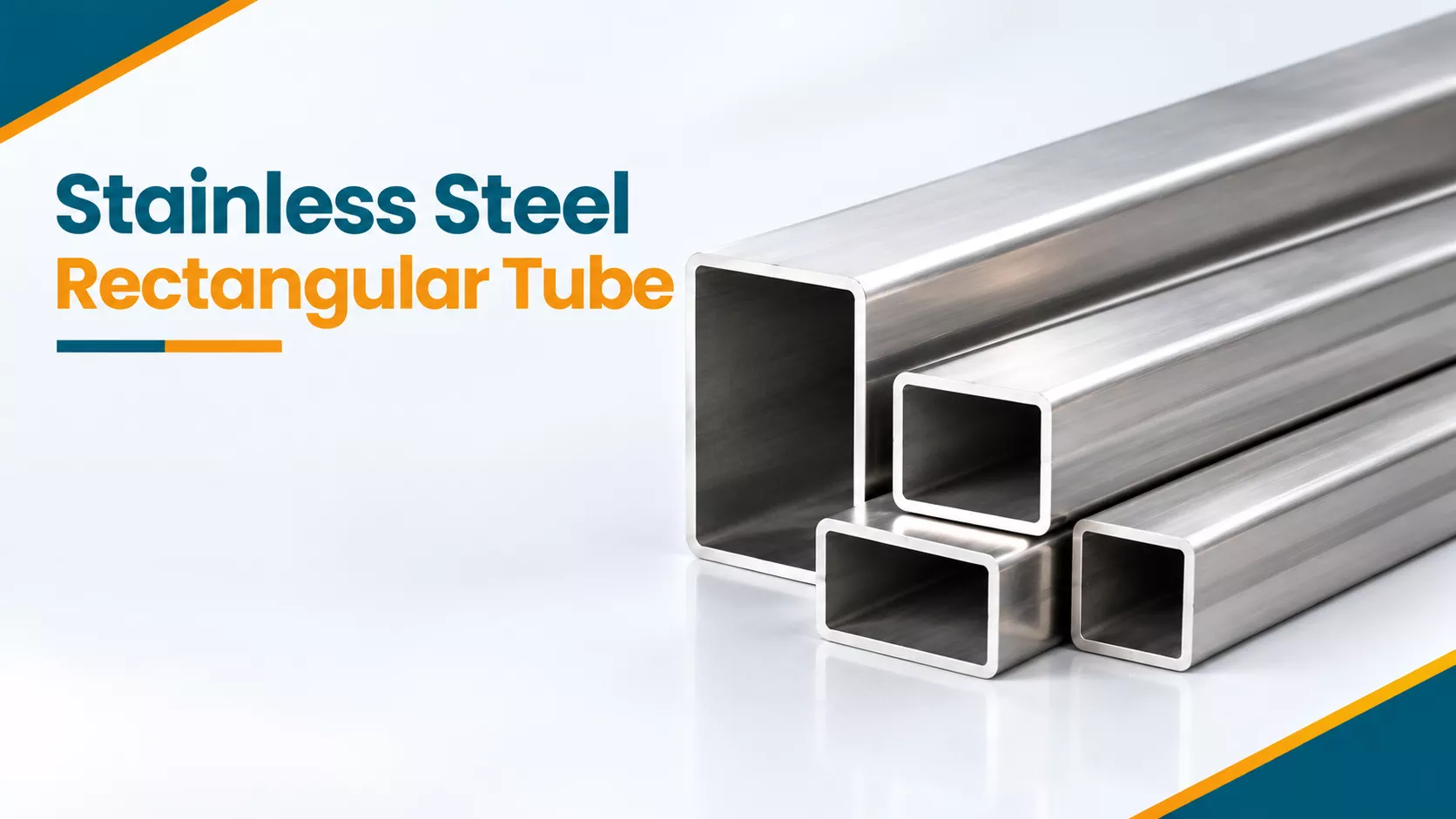
What Is a Stainless Steel Rectangular Tube?
A stainless steel rectangular tube is a hollow metal profile with a rectangular cross-section, manufactured from stainless steel through welded production processes. It is used in structural frameworks, furniture, architectural installations, and industrial equipment where corrosion resistance, durability, and a clean finish are important.
Common applications include:
- Architectural structures: Facades, pergolas, frames, and support structures.
- Furniture: Tables, chairs, shelving, and commercial interiors.
- Handrails and guardrails: Residential, commercial, and public installations.
- Industrial equipment: Machine frames, conveyor systems, and equipment supports.
Stainless steel rectangular tubes combine corrosion resistance, mechanical strength, and an attractive surface finish. The performance of each tube depends on its alloy grade, dimensions, manufacturing quality, and operating environment.
Standard Sizes and Dimensions of Stainless Steel Rectangular Tubes?
Stainless steel rectangular tube dimensions are generally specified by width, height, and wall thickness. These measurements are commonly expressed in millimetres, although imperial dimensions are also used in some markets.
How to Interpret Dimensions
- Width and height: The external dimensions of the rectangular cross-section.
- Wall thickness: The thickness of the tube wall, which affects weight, strength, and material consumption.
Common Stainless Steel Rectangular Tube Size Chart
The following sizes are general reference examples. Confirm availability, tolerances, and wall thickness with the manufacturer before specifying a tube for your project.
| Width × Height (mm) | Typical Wall Thickness (mm) | Typical Applications |
|---|---|---|
| 20 × 10 | 1.0–1.5 | Light furniture and decorative structures |
| 40 × 20 | 1.5–2.0 | Furniture frames and handrails |
| 50 × 30 | 2.0–3.0 | Support frames and architectural structures |
| 80 × 40 | 3.0–4.0 | Industrial and architectural frameworks |
| 100 × 50 | 3.0–5.0 | Structural frameworks, subject to engineering requirements |
Note: These dimensions and thicknesses are illustrative market references, not a guarantee of stock availability or suitability for a particular load. Confirm the actual product specification before ordering.
Sizes of Stainless Steel 304 Rectangular Tubes
Stainless Steel 304 rectangular tubes are hollow sections with a rectangular cross-section, commonly used in fabrication, furniture, architectural frameworks, equipment frames, and industrial structures. Tube sizes are specified by external width × height and wall thickness, usually in millimetres. The required dimensions depend on the load, installation space, fabrication method, and intended application.
The following table shows examples of rectangular tube dimensions. These are reference sizes only; availability, wall thickness, length, and surface finish should be confirmed with the manufacturer or stockist.
| External Width × Height (mm) | Example Wall Thickness (mm) | Typical Applications |
|---|---|---|
| 20 × 10 | 1.0–2.0 | Light fabrication, furniture, and small frames |
| 40 × 20 | 1.0–2.0 | Display frames, partitions, and general fabrication |
| 50 × 30 | 1.5–3.0 | Equipment frames and architectural fabrication |
| 80 × 40 | 1.5–3.0 | Structural frameworks and support frames |
| 100 × 50 | 2.0–5.0 | Heavy-duty fabrication and larger frameworks |
Note: The wall thickness ranges and applications above are illustrative, not a verified dimensional standard or stock list. Confirm the applicable product specification, dimensional tolerances, and load requirements before selecting a tube.
Stainless Steel Rectangular Tube Weight Chart
The weight of a stainless steel rectangular tube is generally expressed in kilograms per metre (kg/m). It depends on the external width, external height, wall thickness, corner radii, and stainless steel density. For tubes of the same external dimensions, a thicker wall generally means a higher weight per metre.
The table below provides approximate theoretical weights for selected rectangular tube sizes, assuming a stainless steel density of 7,930 kg/m³ and a simplified sharp-corner calculation. Actual values may differ because of rounded corners, manufacturing tolerances, and the material grade.
| External Size (mm) | Wall Thickness (mm) | Approx. Weight (kg/m) |
|---|---|---|
| 20 × 10 | 1.0 | 0.43 |
| 20 × 10 | 1.5 | 0.61 |
| 40 × 20 | 1.5 | 1.32 |
| 40 × 20 | 2.0 | 1.70 |
| 50 × 30 | 1.5 | 1.79 |
| 50 × 30 | 2.0 | 2.33 |
| 80 × 40 | 2.0 | 3.60 |
| 100 × 50 | 3.0 | 6.72 |
How to Estimate Rectangular Tube Weight
A simplified theoretical weight calculation is:
Weight per metre (kg/m) ≈ [W × H − (W − 2t) × (H − 2t)] × 0.00793
Where:
- W = external width in millimetres
- H = external height in millimetres
- t = wall thickness in millimetres
- 0.00793 = conversion factor based on a density of 7,930 kg/m³
This simplified formula assumes sharp rectangular corners and does not account for corner radii or manufacturing tolerances. Use the manufacturer's dimensional data for a more accurate estimate.
For a quotation from Kamal Steels, specify the grade (such as SS 304), external dimensions, wall thickness, required length, finish, and quantity. This helps confirm the appropriate specification, availability, and estimated material weight.
Why Is Stainless Steel 304 the Most Popular Rectangular Tube?
Stainless steel 304 rectangular tubes are widely used because they offer a practical combination of corrosion resistance, formability, weldability, and cost. Grade 304 typically contains approximately 18% chromium and 8% nickel, although the exact composition is governed by the applicable material specification.
Choose Grade 304 for many indoor, architectural, furniture, and general-purpose applications where corrosion conditions are moderate.
Consider Grade 316 for applications requiring improved resistance to chloride-induced pitting, such as certain coastal, marine, and chemical-processing environments. Its suitability still depends on the chloride concentration, temperature, and other operating conditions.
Typical applications include building facades, public-building handrails, furniture frames, and selected food-processing equipment.
Types of Finishes and Polishing Are Available for SS Rectangular Tubes
The surface finish affects the appearance, cleaning requirements, and cost of stainless steel rectangular tubes. Common options include:
- Mirror polished: A highly reflective finish commonly used for decorative and architectural applications.
- Brushed: A directional finish with a linear texture, suitable for furniture, interiors, and commercial installations.
- Matte or satin: A less reflective appearance used in applications where a subdued finish is preferred.
- Standard mill finish: A production finish whose appearance depends on the manufacturing and finishing process.
Mirror polishing generally requires additional processing and may increase the purchase price. Select the finish according to the appearance, cleaning, environmental exposure, and maintenance requirements of the application.
What Affects the Price of Stainless Steel Rectangular Tubes?
The price of stainless steel rectangular tubes depends on several factors:
- Alloy grade: Grade 316 often costs more than Grade 304 because of differences in alloy composition and market prices.
- Wall thickness: Thicker walls require more raw material per metre.
- Surface finish: Polishing and other finishing operations can increase processing costs.
- Order quantity: Larger orders may qualify for different unit pricing.
- Dimensions and manufacturing: Special sizes and tighter tolerances may require additional processing.
- Supplier and delivery: Stock availability, packaging, freight, and lead time affect the final cost.
Stock Tubes vs Custom Orders
Stock stainless steel rectangular tubes may be available for quicker dispatch and can avoid the lead times associated with special production. Custom orders are useful when a project requires non-standard dimensions, grades, or finishes, but availability, minimum order quantities, costs, and delivery schedules should be confirmed in advance.
For larger requirements, request a quotation that clearly states the grade, dimensions, wall thickness, finish, quantity, documentation, and delivery terms so that offers can be compared accurately.
How to Choose Suppliers and Manufacturers of SS Rectangular Tubes
Choose a supplier that can meet your dimensional and material requirements and provide the documentation needed for your application. Consider the following factors:
- Material documentation: Check material test certificates, grade identification, and traceability where required.
- Product availability: Confirm whether the required dimensions, thicknesses, and finishes are in stock.
- Manufacturing capability: Verify the ability to supply the specified dimensions and applicable product standard.
- Delivery timelines: Confirm dispatch dates, packaging, and transport arrangements.
- Technical support: Look for clear specifications and assistance with product selection.
Quick Checklist Before Placing an Order
- Is the stainless steel grade confirmed?
- Are the width, height, wall thickness, and length specified?
- Has the surface finish been agreed upon?
- Are material certificates and inspection documents required?
- Is the product in stock or subject to a production lead time?
- Have shipping, packaging, quantity, and delivery terms been confirmed?
Stainless Steel Rectangular Tube FAQs
A stainless steel rectangular tube is a hollow metal section with a rectangular cross-section. It is used in structural frameworks, machinery, fabrication, furniture, architectural features, and industrial equipment. Its corrosion resistance and mechanical properties depend on the stainless steel grade and operating environment.
Stainless steel rectangular tubes contain chromium, which helps provide corrosion resistance. Carbon steel rectangular tubes generally need suitable coatings or other protection in corrosive environments. The right option depends on exposure conditions, strength requirements, maintenance needs, and budget.
Common reference dimensions include 20 × 10 mm, 40 × 20 mm, 50 × 30 mm, 80 × 40 mm, and 100 × 50 mm. Available sizes and wall thicknesses vary by manufacturer, grade, and production requirements. Confirm the required dimensions before ordering.
Stainless steel grades 304 and 316 are commonly considered for rectangular tube applications. Grade 304 is used for many general-purpose applications, while grade 316 offers improved resistance to chloride-related corrosion. Grade selection should consider the environment, temperature, fabrication needs, and applicable specifications.
The theoretical weight depends on the external width, external height, wall thickness, length, and material density. A simplified calculation estimates the metal cross-sectional area by subtracting the internal hollow area from the external area, then multiplying by length and density. Corner radii and manufacturing tolerances can affect the actual weight, so use the manufacturer's weight data when available.
Welded rectangular tubes are formed from stainless steel material and joined along a seam before or during forming, depending on the manufacturing process. Seamless tubes are produced without a longitudinal welded seam and may require additional forming to achieve a rectangular shape. The suitable type depends on the required dimensions, mechanical properties, application, and product specification.
Stainless steel rectangular tubes are used in architectural structures, handrails, furniture, industrial frames, machinery, transport equipment, food-processing facilities, and fabrication projects. The required grade, wall thickness, and finish depend on the load, environment, hygiene requirements, and intended use.
Depending on the manufacturing process and supplier, stainless steel rectangular tubes may be available with mill finishes, brushed finishes, or polished surfaces. The appropriate finish depends on appearance, cleaning requirements, corrosion exposure, and the intended application. Confirm finish availability when requesting a quotation.
Kamal Steels can be contacted to enquire about stainless steel rectangular tube requirements. Share the grade, external dimensions, wall thickness, finish, quantity, and delivery location to check current availability, lead time, and supply options.
Specify the stainless steel grade, external width and height, wall thickness, tube length, surface finish, required standard, quantity, and delivery location. If inspection documents or a material test certificate are required, mention them before placing the order so the supplier can confirm whether they are available for the requested material.
Find the Ideal Stainless Steel Rectangular Tube for Your Project
Selecting the right stainless steel rectangular tube involves matching the alloy grade, dimensions, wall thickness, and finish to the project's requirements. Supplier documentation, stock availability, and delivery capability are also important considerations.
Use the size information in this guide as a starting point, then verify the exact specifications with the supplier before placing an order. For project-specific requirements, contact Kamal Steels to enquire about available stainless steel products, dimensions, and technical documentation.
Request a Quote from Kamal Steels