
-
-
-
Girgaon, Mumbai - 400004
What Is an ASME Code?
ASME Codes are technical requirements used for the design, materials, fabrication, examination, testing, inspection, and construction of specific mechanical and pressure equipment systems. They are developed and published by the American Society of Mechanical Engineers (ASME) and are widely referenced in industries such as power generation, oil and gas, chemical processing, petrochemical, manufacturing, and pressure equipment.
Different ASME Codes apply to different types of equipment and piping systems. For example, the ASME B31 series covers pressure piping, while the ASME Boiler and Pressure Vessel Code (BPVC) covers areas such as boilers, pressure vessels, materials, examination, and welding qualifications.
Common ASME Code Requirements
- Design and engineering requirements
- Material requirements
- Fabrication requirements
- Welding requirements
- Examination and inspection
Testing & Quality Requirements
- Testing requirements
- Quality control requirements
- Installation requirements
- Inspection requirements
- In-service requirements, where applicable
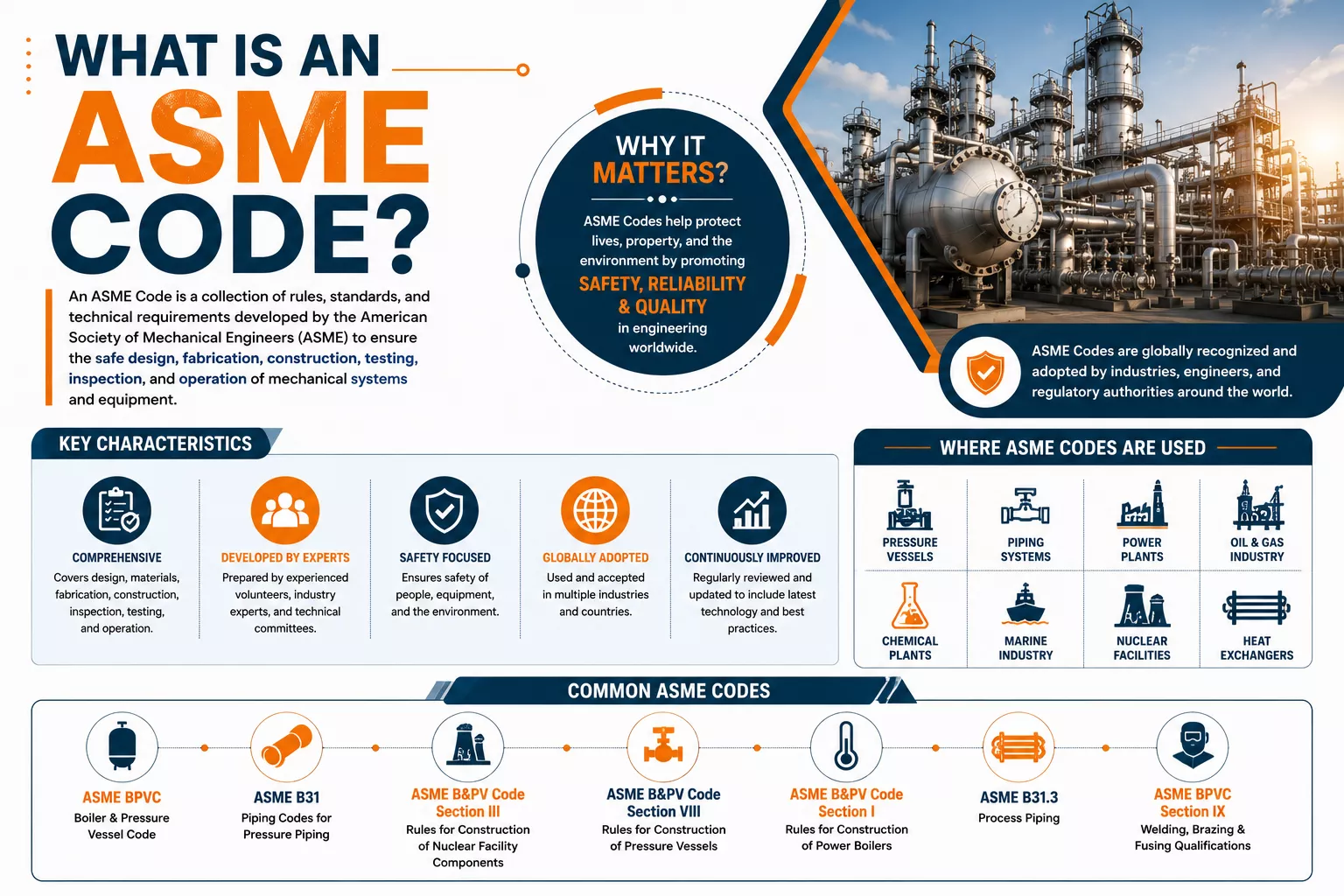
What Is ASME?
ASME stands for the American Society of Mechanical Engineers. It develops and publishes codes and standards covering mechanical engineering applications such as piping systems, boilers, pressure vessels, materials, welding, inspection, and related engineering practices.
ASME publications provide technical requirements used by engineers, manufacturers, fabricators, inspectors, and other industry professionals when designing, manufacturing, inspecting, and maintaining equipment and engineering systems.
Is ASME a Code or Standard?
An ASME Code is a set of technical requirements developed for a specific type of engineering system, equipment, or application. Depending on its scope, an ASME Code may address design, materials, fabrication, welding, examination, inspection, testing, installation, and other applicable requirements.
For example:
| ASME Code Requirement | What It Covers |
|---|---|
| Design & Engineering | Design conditions, calculations, dimensions, pressure, temperature and applicable engineering requirements. |
| Materials | Applicable material specifications, grades, properties and material requirements. |
| Fabrication & Welding | Fabrication methods, welding, joining procedures and qualification requirements. |
| Examination & Inspection | Inspection methods, examination requirements and quality-control provisions. |
| Testing | Applicable pressure testing, nondestructive examination and other testing requirements. |
A project may require several ASME documents to be used together, depending on the equipment, piping system, material, dimensions, and applicable project requirements.
What Is the ASME Code for Piping?
There is no single ASME Code that applies to every piping system. The applicable code depends on the type of piping, service conditions, operating requirements, and project specifications.
The ASME B31 Code for Pressure Piping contains several individual codes covering different piping applications.
ASME Code List
The ASME Code List covers codes used for different types of piping, boilers, pressure vessels, nuclear components, examination, and welding qualification. The applicable Code depends on the type of system or equipment and its specific engineering requirements.
| ASME Code | Code Title / Coverage | Common Application |
|---|---|---|
| ASME B31.1 | Power Piping | Power generation and related piping systems |
| ASME B31.3 | Process Piping | Chemical, petrochemical, refining, and processing plants |
| ASME B31.4 | Pipeline Transportation Systems for Liquids and Slurries | Liquid and slurry pipeline transportation |
| ASME B31.8 | Gas Transmission and Distribution Piping Systems | Gas transmission and distribution systems |
| ASME B31.9 | Building Services Piping | Building service piping systems |
| ASME B31.12 | Hydrogen Piping and Pipelines | Hydrogen piping and pipeline systems |
| ASME BPVC Section I | Rules for Construction of Power Boilers | Power boiler construction |
| ASME BPVC Section II | Materials | Materials used under applicable ASME Code requirements |
| ASME BPVC Section III | Rules for Construction of Nuclear Facility Components | Nuclear facility components |
| ASME BPVC Section V | Nondestructive Examination | Nondestructive examination and inspection |
| ASME BPVC Section VIII | Rules for Construction of Pressure Vessels | Pressure vessel construction |
| ASME BPVC Section IX | Welding, Brazing, and Fusing Qualifications | Procedure and personnel qualification |
These Codes have different scopes and are not interchangeable. For example, ASME B31.3 applies to process piping, whereas ASME BPVC Section VIII addresses pressure vessel construction. The appropriate Code should be confirmed according to the equipment, service conditions, design requirements, and project specification.
What Is the ASME Boiler and Pressure Vessel Code (BPVC)?
The ASME Boiler and Pressure Vessel Code (BPVC) is a major ASME code covering requirements for boilers, pressure vessels, and other applicable pressure equipment.
The BPVC is divided into multiple sections, with each section addressing a specific area such as power boilers, materials, nondestructive examination, pressure vessels, or welding qualifications.
ASME BPVC Sections
| ASME BPVC Section | General Coverage |
|---|---|
| Section I | Rules for Construction of Power Boilers |
| Section II | Materials |
| Section III | Rules for Construction of Nuclear Facility Components |
| Section V | Nondestructive Examination |
| Section VIII | Rules for Construction of Pressure Vessels |
| Section IX | Welding, Brazing, and Fusing Qualifications |
The applicable BPVC section depends on the equipment, material, construction method, and project requirements.
ASME Section VIII – Pressure Vessels
ASME BPVC Section VIII provides requirements for the construction of pressure vessels. Section VIII includes different divisions, with Division 1 and Division 2 commonly referenced for pressure vessel applications.
ASME Section VIII Division 1
ASME Section VIII, Division 1 provides rules for the construction of pressure vessels within its scope. It addresses requirements associated with pressure vessel design, materials, fabrication, examination, inspection, testing, and certification.
ASME Section VIII Division 2
ASME Section VIII, Division 2 provides alternative rules for the construction of pressure vessels. It uses a different design approach from Division 1 and is intended for applications where the Division 2 requirements are applicable.
How to Read an ASME Code
Reading an ASME Code starts with identifying the correct code or section that applies to the equipment, piping system, or engineering application. The following steps provide a simple approach to understanding the applicable requirements.
1. Identify the Application
Determine whether the project involves process piping, power piping, pressure vessels, boilers, or another engineering system.
2. Select the Applicable Code
Identify the ASME Code that applies to the application. For example, process piping may be covered by ASME B31.3.
3. Check the Scope
Review the scope of the selected code to understand which equipment, piping systems, services, and applications are covered.
4. Identify Material Requirements
Check the applicable material specifications, grades, product forms, material properties, and other requirements specified by the code.
5. Review Design Requirements
Review the applicable design requirements, including pressure, temperature, dimensions, loads, and other engineering conditions.
6. Check Fabrication and Welding
Review requirements for fabrication, welding, joining methods, procedures, and personnel qualifications where applicable.
7. Review Examination and Testing
Determine the applicable inspection, nondestructive examination, pressure testing, and other testing requirements.
8. Check Project Requirements
Compare the applicable ASME Code requirements with the project specification, purchase order, customer requirements, and applicable edition.
How to Select the Right ASME Code
Selecting the applicable ASME Code depends primarily on the type of equipment or piping system, its service conditions, and the requirements of the project.
| Factor | What to Consider |
|---|---|
| Equipment or Piping Type | Determine whether the application involves process piping, power piping, pressure vessels, boilers, or another system. |
| Service Conditions | Consider operating pressure, temperature, fluid, and service environment. |
| Material | Confirm the required material grade, product form, and applicable material specification. |
| Design Requirements | Review the applicable design and engineering requirements for the system. |
| Inspection & Testing | Confirm applicable examination, inspection, testing, and certification requirements. |
| Project Requirements | Verify the applicable Code edition, purchase specification, customer requirements, and regulatory requirements. |
The final Code selection should be verified against the applicable ASME Code edition, project specification, engineering requirements and regulatory requirements before design, fabrication, inspection, or procurement begins.
Frequently Asked Questions
An ASME Code is a set of technical rules and requirements developed by the American Society of Mechanical Engineers for the design, materials, fabrication, examination, testing, and inspection of specific types of mechanical equipment and piping systems.
ASME B31 is the primary ASME Code series for piping systems. Different sections apply to different piping applications. For example, ASME B31.3 covers process piping, while ASME B31.1 covers power piping.
ASME publishes both Codes and Standards. ASME Codes establish detailed rules for specific equipment, systems, and applications, while ASME Standards provide technical requirements, specifications, dimensions, procedures, and other engineering criteria.
The ASME Boiler and Pressure Vessel Code (BPVC) is a comprehensive set of rules covering the design, construction, materials, fabrication, examination, inspection, testing, and certification of boilers, pressure vessels, and related components.
ASME Section VIII of the Boiler and Pressure Vessel Code provides requirements for the construction of pressure vessels. It includes rules related to design, materials, fabrication, examination, inspection, testing, and certification of pressure vessels.
ASME B31.3 is used for process piping. It covers requirements for the design, materials, fabrication, assembly, erection, examination, inspection, and testing of piping typically found in chemical, petroleum, pharmaceutical, and other process plants.
ASME B31.1 is the Power Piping Code. It provides requirements for the design, materials, fabrication, erection, examination, inspection, and testing of piping systems commonly associated with power generation and related facilities.
An ASME Code generally provides comprehensive rules for the design, construction, fabrication, examination, inspection, and testing of a specific type of equipment or piping system. An ASME Standard generally establishes technical requirements, specifications, dimensions, methods, or other engineering criteria for a particular subject.
ASME B31.12 provides requirements for hydrogen piping and pipelines. It addresses design, materials, fabrication, assembly, erection, examination, inspection, and testing requirements for hydrogen piping systems and related applications.
The appropriate ASME Code should be selected based on the type of equipment or piping system, operating pressure and temperature, service conditions, materials, design requirements, fabrication methods, inspection and testing requirements, and applicable project or regulatory requirements. The applicable Code edition and project specification should be verified before design or procurement.